Type: Article -> Category: AI Business

AI Range Anxiety: Will Rising AI Costs Slow Innovation?
The New Fear Nobody Seems to Be Talking About
Don't have time to read the article? View as a short video storyboard or listen to it whilst jogging.
Publish Date: Last Updated: 19th July 2026
Author: nick smith- With the help of CHATGPT
When people talk about anxiety surrounding artificial intelligence, the conversation usually revolves around familiar themes: Will AI replace jobs? Will it become too powerful? Can we trust what it produces?
There is another form of anxiety emerging among developers, researchers and independent creators, yet it receives very little attention.
I call it AI Range Anxiety.
The name is borrowed from the world of electric vehicles. Early EV owners constantly worried whether they had enough battery charge to reach their destination. In many cases the cars were perfectly capable of completing the journey, but the uncertainty itself changed behaviour. Drivers planned shorter trips, avoided risks and constantly checked the remaining range.
Increasingly, I find myself asking a similar question about AI.
Not whether it can solve the next problem, but whether I will still be able to afford to use it tomorrow.

This Isn't AI Dependency
To be clear, this isn't about becoming incapable of working without AI.
I can still write software, design databases and solve technical problems the traditional way. Like many experienced developers, I spent decades doing exactly that.
What AI has changed is the speed at which ambitious ideas can be explored.
Projects that once required months of experimentation can now progress in weeks. Complex concepts can be discussed, challenged and refined continuously. AI has become less like a replacement for knowledge and more like an always-available research partner.
The anxiety comes from knowing that this partnership exists entirely at someone else's discretion.
Building on Borrowed Foundations
Every serious AI project today depends upon services owned by a relatively small number of companies.
Models improve.
Pricing changes.
Usage limits appear.
Older models are retired.
Capabilities evolve.
All of these changes are understandable from a business perspective, but they introduce uncertainty for anyone building long-term projects.
Imagine spending thousands of hours developing workflows around a particular AI model, only to discover that it has been replaced, restricted or priced beyond your budget.
The project itself may still be technically possible.
It simply becomes financially unrealistic.
Independent Researchers Feel It First
Large organisations can often absorb higher subscription costs or increased token usage.
Independent researchers rarely can.
Many of the most interesting ideas begin with a single person working evenings and weekends, investing more time than money. AI has dramatically lowered the barrier to entry for this kind of innovation, allowing individuals to tackle problems that previously required university laboratories or well-funded research teams.
That opportunity is extraordinary.
But it also creates a new dependency on affordable access.
As someone developing the PFVME research project, I see this first-hand. AI hasn't done the research for me, but it has accelerated every stage of the journey. It has challenged assumptions, refined architectures, improved documentation and acted as a constant source of technical discussion.
Without affordable AI, progress would almost certainly have been slower.
Not impossible.
Just significantly slower.
Is the Anxiety Justified?
Some would argue that this fear is misplaced.
After all, AI models continue to become more efficient, competition between providers is increasing and open-weight models improve every month.
Those are encouraging trends.
However, uncertainty remains.
No developer can confidently predict what access to today's frontier models will look like five years from now. Subscription prices, token costs, fair-use limits and available capabilities are all subject to change.
Ironically, uncertainty is often more disruptive than high prices themselves.
If developers knew exactly what AI would cost over the next decade, they could budget accordingly.
Instead, they are forced to build on shifting ground.
The Risk to Innovation
The greatest concern isn't that established businesses will stop using AI.
They almost certainly won't.
The real risk is that independent experimentation slows.
History repeatedly shows that some of the most influential ideas originate outside large corporations. Individual developers, hobbyists, academics and small teams have often driven innovation precisely because they could afford to experiment.
If advanced AI becomes progressively less accessible to independent creators, we may never discover the ideas that were never affordable to pursue.
Innovation doesn't just depend on intelligence.
It depends on access.
Building for an Uncertain Future
Perhaps the answer isn't to fear AI range anxiety but to design around it.
Developers can reduce risk by keeping workflows portable, avoiding unnecessary dependence on a single provider, experimenting with local models where practical and designing software that can adapt as the AI landscape changes.
None of these approaches eliminate uncertainty, but they reduce the impact if circumstances change.
Final Thoughts
Artificial intelligence has opened opportunities that would have seemed unrealistic only a few years ago. It has given individuals the ability to explore ideas that once belonged exclusively to well-funded organisations.
That is something worth protecting.
My concern isn't that AI will disappear.
It's that uncertainty over future access may quietly discourage the very people most likely to use it in creative and unexpected ways.
Perhaps AI Range Anxiety is simply the growing pain of a young industry.
Or perhaps it is an early warning that innovation flourishes best when powerful tools remain accessible to everyone—not just those with the deepest pockets.

Latest AI Business Articles
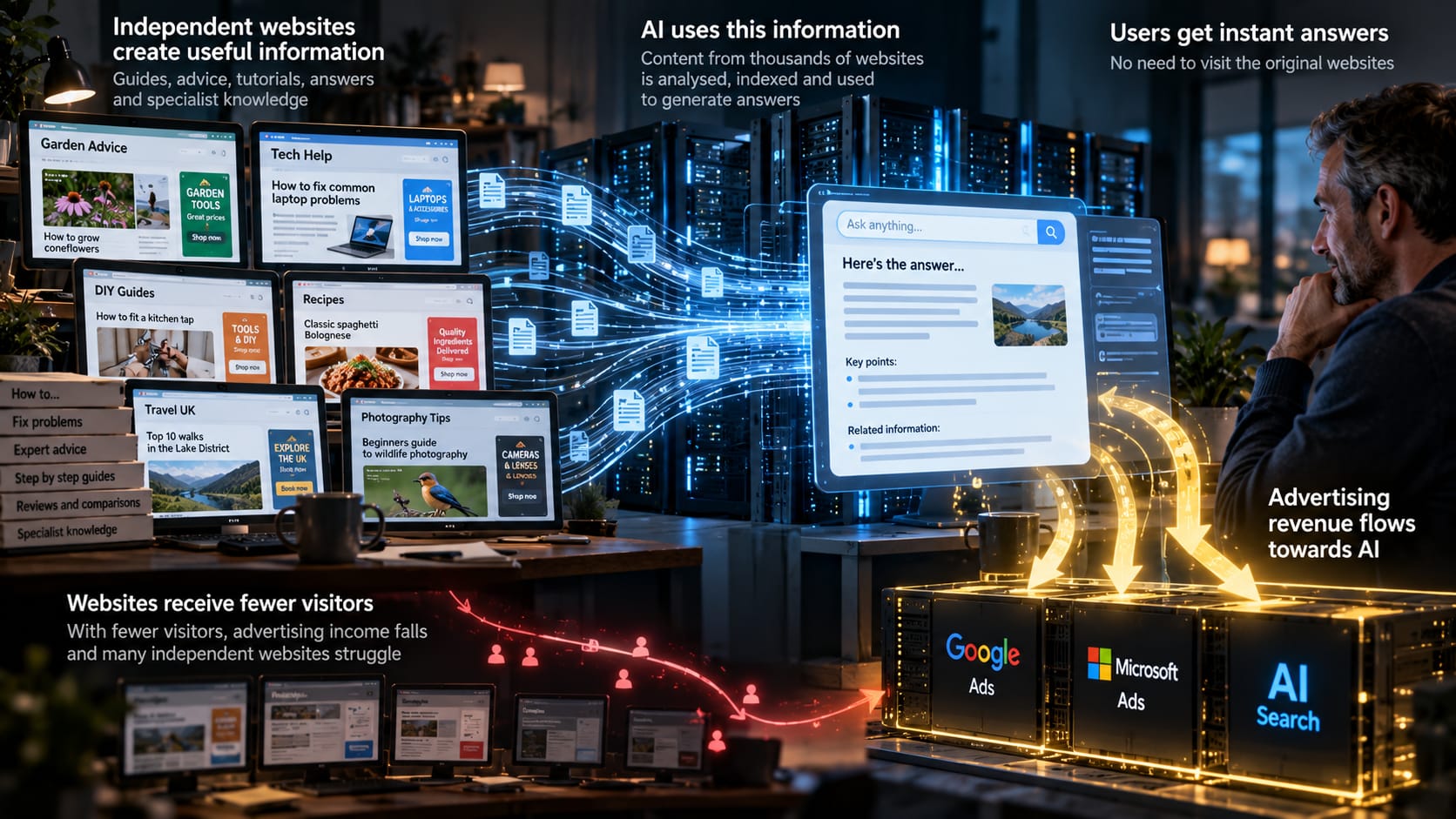
The AI Advertising Paradox
AI search gives us answers without requiring us to visit the websites that created them. That's convenient for users, but...
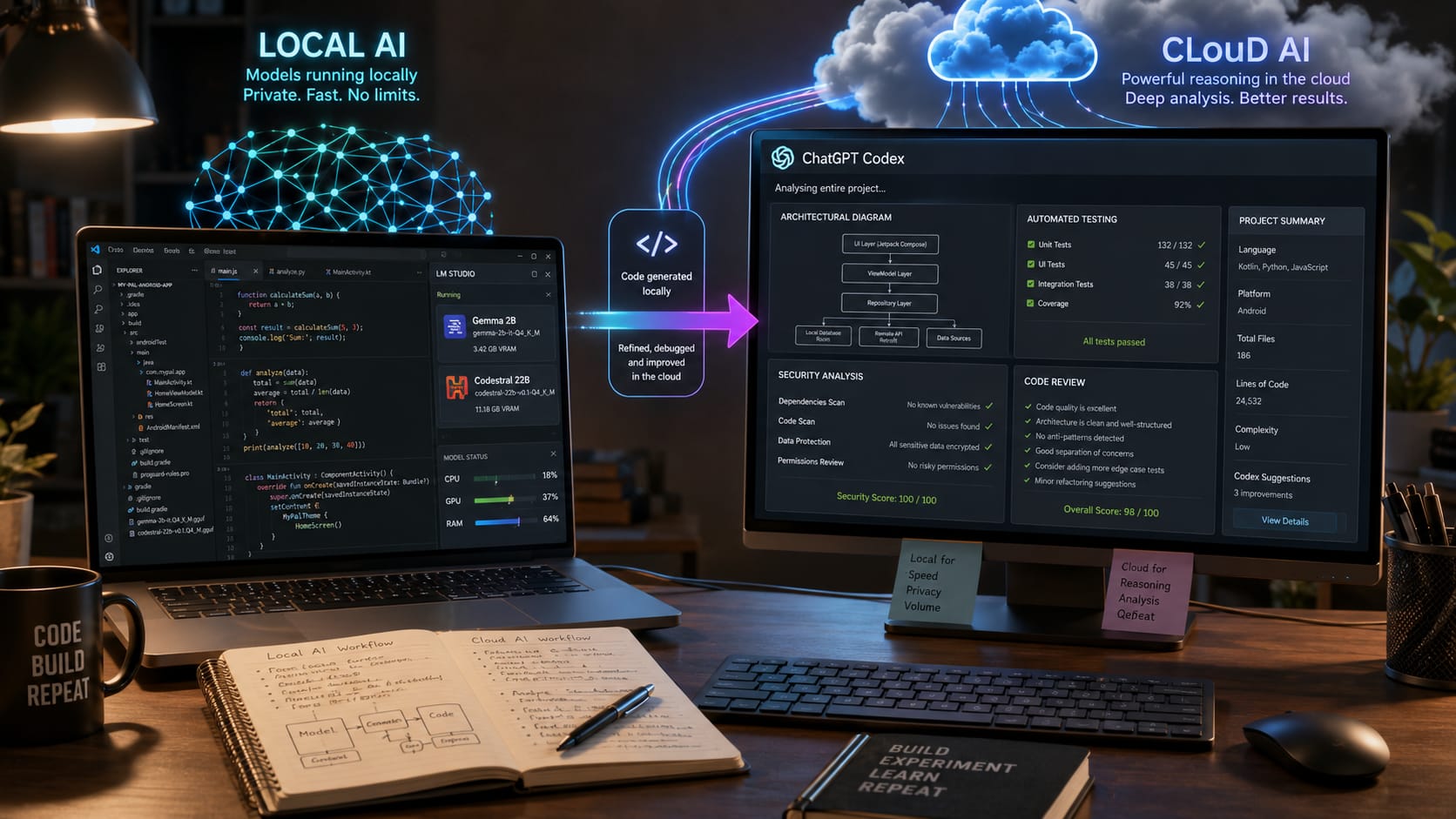
Coding with Local AI vs Cloud AI
Cloud AI transformed the way I write software, but growing projects also brought growing concerns over usage limits. After a week...
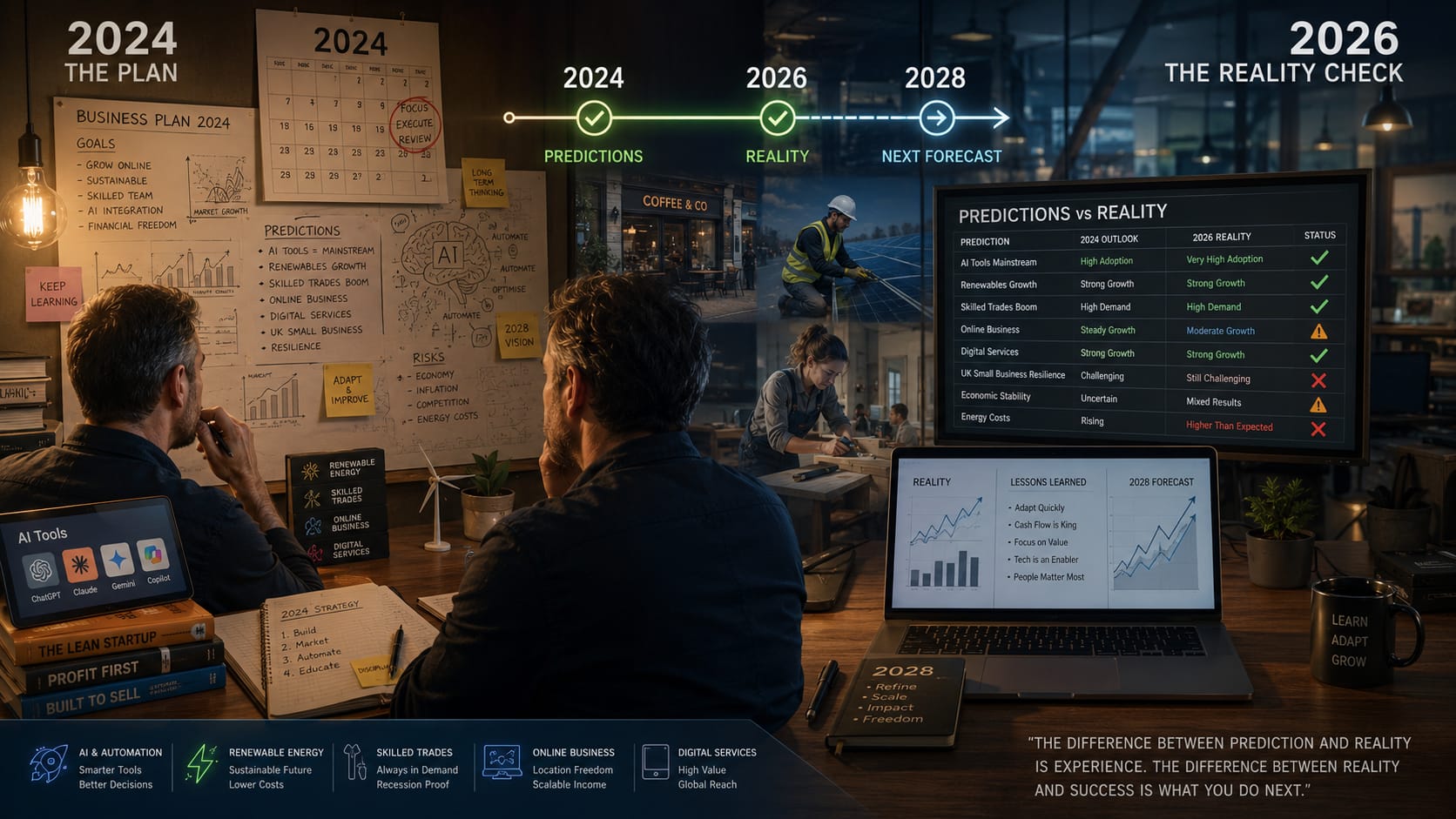
If You Wanted to Start a Business in the UK Today… Were We Right?
Two years ago, we predicted the best businesses to start in the UK. Now it's time to hold those predictions accountable. Discover...

Are You in Charge of Your AI – Or Is AI in Charge of You?
Artificial Intelligence can improve efficiency and reduce costs, but are you still making the decisions? Discover how businesses...

AI Can Transform Your Business – But What Happens When It Fails?
Artificial Intelligence can transform productivity, efficiency and customer service, but over-reliance creates new business risks....

The Invisible Battlefield: How AI Trading Bots Could Turn Geopolitical Conflict into Financial Shockwaves
AI trading bots now react to global news in milliseconds. During geopolitical crises, these automated systems can amplify market...
From Digital Currency to Volatility Engine: What Crypto Became in the Age of AI
Crypto began as a decentralised currency experiment. Today it functions as a high-volatility speculative market, now accelerated...

When AI Catches the Flu: Why Backup, Recovery, and Resilience Mean Something Different for Intelligent Systems
When AI replaces human systems, failure changes shape. This article explores what happens when AI “gets sick,” why it can’t be...

AI Questions and Answers section for AI Range Anxiety: Will Rising AI Costs Slow Innovation?
Welcome to a new feature where you can interact with our AI called Jeannie. You can ask her anything relating to this article. If this feature is available, you should see a small genie lamp above this text. Click on the lamp to start a chat or view the following questions that Jeannie has answered relating to AI Range Anxiety: Will Rising AI Costs Slow Innovation?.
Visitor asked: Are AI token costs for coding going up or down
Jeannie’s answer to the question: AI token costs for coding have generally been trending upward, as major providers have introduced higher prices for newer, more powerful models and tighter limits on free usage. This rise in costs is a source of "AI range anxiety" as users worry about the affordability and sustainability of building and running AI-powered tools.
Date: 2026-08-05
Visitor asked: How much would it cost to use AI to develop a website with a login, administration and user section using a standard cloud based tool such as Codex
Jeannie’s answer to the question: The cost to use AI, such as OpenAI Codex or similar cloud-based tools, to develop a website with a login, administration, and user section would depend on the token pricing and the complexity of the code generated. For many commercial AI coding tools, usage is billed by the number of tokens processed (which correlates with code length and prompts). For a moderately complex website, generating and iteratively refining code could require tens or hundreds of thousands of tokens, potentially costing anywhere from $10 to several hundred dollars at current enterprise rates. However, ongoing updates, debugging, and further development could increase usage and costs substantially, especially as pricing models evolve. Additionally, these costs are in addition to regular cloud hosting and storage fees, which are separate from the AI tool subscription or token charges.
Date: 2026-08-05
Type: Article -> Category: AI Business