Type: Article -> Category: AI Business
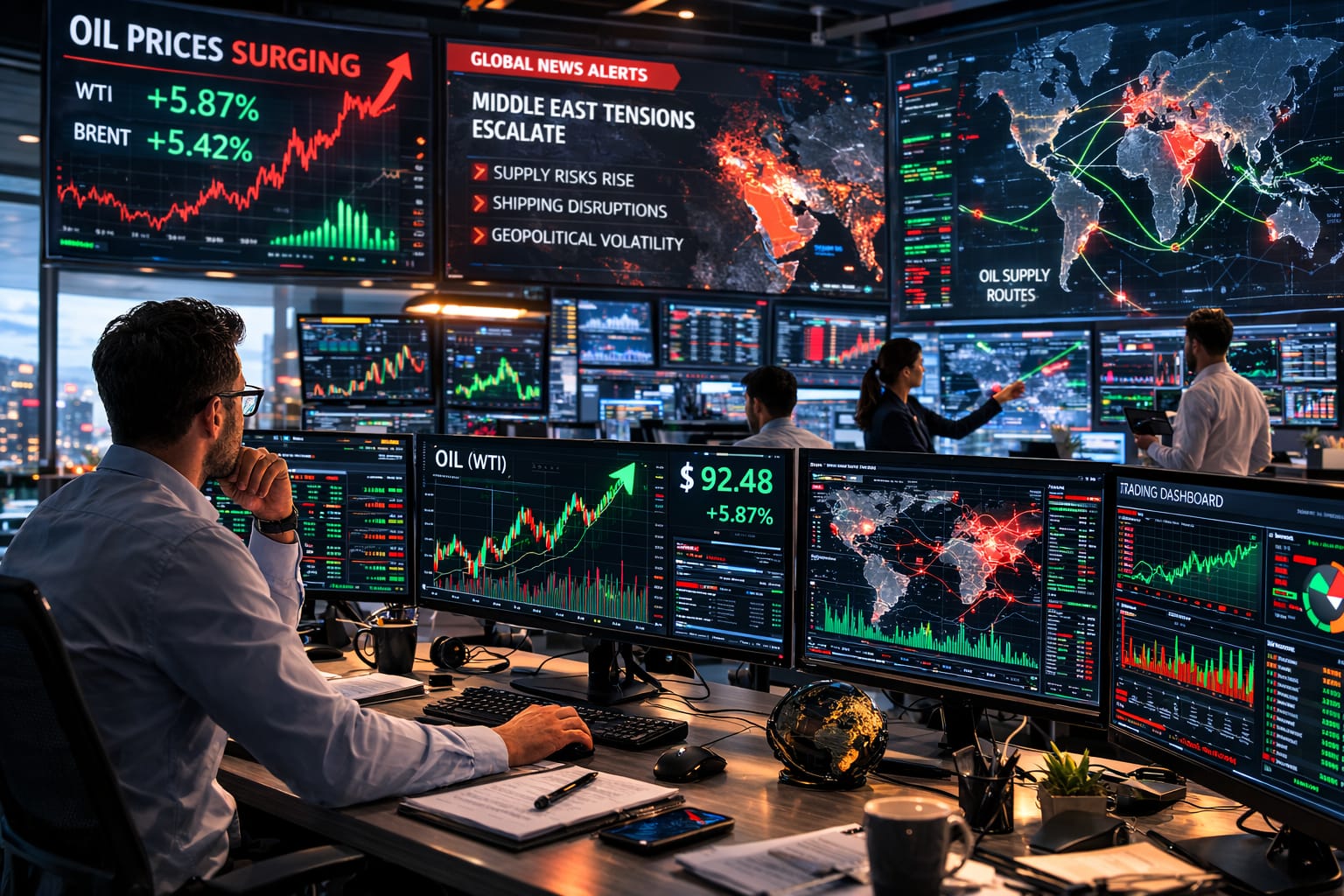
The Invisible Battlefield: How AI Trading Bots Could Turn Geopolitical Conflict into Financial Shockwaves
Don't have time to read the article? View as a video storyboard or listen to it whilst jogging.
Publish Date: Last Updated: 12th March 2026
Author: nick smith- With the help of CHATGPT
In many modern markets, humans are no longer the primary actors. The majority of trades are now initiated, analyzed, and executed by automated systems designed to respond to market signals faster than any human possibly could.
Not all algorithmic trading is high-frequency speculation.
Algorithms are also used for:
- pension fund order execution
- market making (providing liquidity)
- arbitrage between exchanges
- large institutional trades
However, during periods of extreme volatility, these systems may react simultaneously, which can amplify price movements.
Global conflict has always moved markets. Wars disrupt trade routes, shake investor confidence, and drive commodity prices higher. But something fundamental has changed in the structure of modern financial markets.
Today, a growing share of global trading is not carried out by humans.
It is executed by algorithms.
These systems, ranging from high-frequency trading engines to sophisticated AI-driven trading bots, operate at speeds and scales that traditional markets were never designed to accommodate. They are not motivated by national stability, humanitarian concerns, or economic resilience. Their only objective is profit.
And in times of geopolitical crisis, chaos can be very profitable.
With tensions rising across the Middle East and oil markets reacting to every development, a new question emerges: could AI-driven trading systems unintentionally amplify global instability?

When Markets React Faster Than Governments
How Much Trading Is Done by Algorithms?
Modern financial markets are far more automated than many people realize. In several major markets, most trades are now executed by algorithms rather than humans.
Estimated Algorithmic / Bot Trading Share by Market
| Market | Estimated Algorithmic Trading Share |
|---|---|
| US equities | ~60–75% of trading volume |
| European equities | ~40–60% |
| Global foreign exchange (FX) | ~70–90% |
| Futures markets | ~60%+ |
| Cryptocurrency markets | Estimated majority in liquid pairs |
| Oil futures / commodity futures | Often estimated 60–80% during peak liquidity |
Estimates suggest that 60–70% of all financial trades globally are now executed by automated trading systems, meaning machines are responsible for the majority of market activity.
In foreign exchange markets, algorithmic trading may account for 70–90% of spot FX turnover, reflecting the heavy use of automated strategies by banks and trading firms.
In equity markets, studies have found that high-frequency trading firms alone may represent around half or more of total trading volume, even though they make up only a small fraction of market participants.
Imagine a breaking news alert.
A major geopolitical development appears on global news wires, perhaps a threat to shipping lanes in the Strait of Hormuz, or an escalation in conflict affecting oil infrastructure.
Within seconds, automated systems begin reacting.
AI models scan news headlines and detect key signals:
- references to oil supply disruptions
- military escalation
- sanctions or shipping risks
- changes in diplomatic posture
These signals trigger automated strategies across multiple markets simultaneously:
- oil futures
- energy companies
- airline stocks
- shipping firms
- currency markets
- cryptocurrency safe-haven assets
Thousands of automated systems respond within milliseconds.
Before policymakers release a statement, before analysts appear on television, markets may already have moved dramatically.
The Automation of Financial Markets
High-frequency trading firms may represent less than 2% of trading firms but generate over 70% of order volume in some equity markets.
For decades, financial markets have been steadily automating.
Algorithmic trading now dominates large parts of modern markets, particularly in:
- equities
- derivatives
- commodities
- foreign exchange
- cryptocurrency markets
These systems use mathematical models to identify patterns, arbitrage opportunities, and short-term price inefficiencies.
High-frequency trading systems can execute thousands of trades per second.
Humans increasingly supervise the systems rather than directly executing trades themselves.
This automation has brought many benefits, including improved liquidity and tighter spreads. But it has also introduced new risks, especially when systems begin reacting to each other rather than to underlying economic fundamentals.
Bots Do Not Create the Crisis, But They Amplify It
The First 60 Seconds of a Geopolitical Shock
- Breaking news hits financial news feeds
- AI models scan headlines for keywords (war, sanctions, oil disruption)
- Trading bots trigger automated strategies
- Oil futures spike
- Airline and transport stocks fall
- Safe-haven assets rise
- Currency markets adjust
All of this can happen before human analysts even begin commenting on the event.
One important point often misunderstood is that algorithmic trading systems rarely create the initial shock.
The initial trigger may be a geopolitical event, a supply disruption, or a sudden change in economic expectations.
However, automated systems can dramatically magnify the market reaction.
When volatility increases, many trading algorithms are programmed to:
- reduce exposure
- exit positions
- short declining assets
- move capital into safe-haven assets
When thousands of algorithms follow similar strategies simultaneously, this behavior can create powerful feedback loops.
Prices fall.
Algorithms detect falling prices.
More algorithms sell.
Volatility increases further.
What began as a geopolitical shock becomes a market cascade.
The Role of AI in Real-Time News Analysis
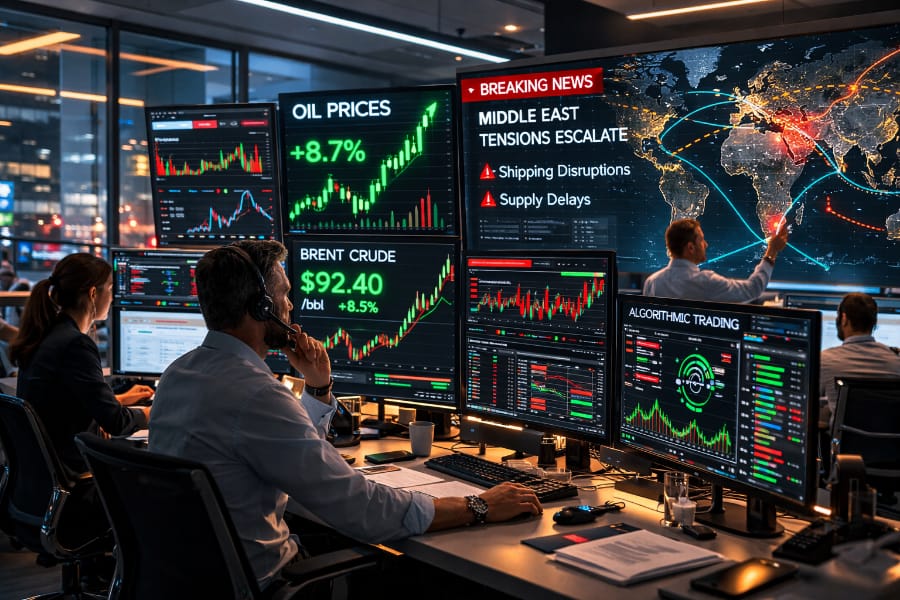
Traditional trading algorithms relied primarily on market data, prices, volumes, and technical indicators.
Artificial intelligence changes this.
Modern AI systems can interpret vast amounts of information in real time, including:
- news articles
- social media posts
- government announcements
- satellite imagery
- supply chain data
AI can extract signals from text and instantly convert them into trading decisions.
In a geopolitical crisis, this means markets can react not just to confirmed events, but to emerging narratives and rumors.
The speed of response becomes limited only by computing power and network latency.
Oil Markets: A Global Pressure Point
Few markets illustrate this vulnerability more clearly than oil.
The global oil system is highly sensitive to geopolitical developments, particularly in regions responsible for large shares of global supply.
One of the most critical locations is the Strait of Hormuz, through which a large percentage of the world’s seaborne oil exports pass.
Strait of Hormuz
Even the perception of disruption in this region can trigger dramatic market reactions.
Oil prices can surge within minutes, affecting:
- transportation costs
- manufacturing prices
- food supply chains
- global inflation
When AI trading systems react simultaneously to geopolitical signals in oil markets, the economic ripple effects can spread worldwide.
When Financial Markets Become a Battlefield
Modern warfare is no longer confined to physical conflict.
Economic systems increasingly play a strategic role in geopolitical competition.
Sanctions, currency pressure, and financial restrictions have already become tools of international power.
But AI-driven trading introduces a new and largely unexamined dimension.
Markets themselves may become a kind of secondary battlefield, not through deliberate sabotage, but through automated reactions to instability.
Financial markets are now tightly connected to real economies.
When markets swing violently:
- pension funds lose value
- currencies weaken
- borrowing costs rise
- businesses cut investment
The consequences ultimately fall on ordinary citizens rather than the systems generating the trades.
Lessons from Market History
Financial markets have already experienced the dangers of automated feedback loops.
One of the most famous examples occurred during the:
2010 Flash Crash
During this event, automated trading interactions caused the U.S. stock market to plunge nearly 1,000 points in minutes before rapidly recovering.
Although markets eventually stabilized, the event revealed how fragile automated financial systems could become under extreme conditions.
Since then, markets have introduced circuit breakers and safeguards.
However, the rise of AI-driven decision systems introduces new layers of complexity that existing protections may not fully address.
The Incentive Problem
Perhaps the most uncomfortable truth about financial markets is that volatility can be highly profitable.
Trading strategies thrive on price movement.
Conflict, uncertainty, and disruption often create exactly the conditions that trading algorithms seek.
In this sense, geopolitical instability can become a source of opportunity for financial systems optimized for profit.
This does not imply malicious intent by traders or developers.
But it highlights a structural problem: markets reward volatility, even when that volatility harms real economies.
The 24-Hour Crypto Amplifier
Cryptocurrency markets introduce an additional complication.
Unlike traditional markets, crypto trading operates continuously, twenty-four hours a day, seven days a week.
AI trading bots in crypto can instantly shift capital between:
- Bitcoin
- stablecoins
- commodity proxies
- decentralized exchanges
When geopolitical news breaks overnight, crypto markets may react immediately, long before traditional financial markets open.
In some cases, these movements can influence investor sentiment across broader financial markets when trading resumes.
The Regulatory Question
As AI becomes more integrated into financial markets, regulators face a difficult challenge.
How should governments respond to systems capable of reacting to geopolitical events faster than humans can interpret them?
Possible policy responses could include:
- stronger circuit breakers for extreme volatility
- transparency requirements for AI trading systems
- restrictions on automated trading during geopolitical emergencies
- monitoring of AI models trained on geopolitical signal analysis
However, implementing such measures globally would be extremely complex.
Financial markets operate across jurisdictions, and trading systems can relocate rapidly to regions with lighter regulation.
A New Kind of Systemic Risk
Artificial intelligence is transforming financial markets in ways that are only beginning to be understood.
Individually, none of the components of this system are new:
- geopolitical conflict
- automated trading
- commodity volatility
But together they form a new kind of systemic risk.
A world where AI systems react instantly to geopolitical events could produce financial shockwaves that travel faster than governments or institutions can stabilize them.
The danger is not that AI trading bots deliberately destabilize markets.
The danger is that they simply do what they were designed to do, seek profit in chaos.
And when thousands of such systems act simultaneously, chaos can scale.
Conclusion
Financial markets are evolving into complex ecosystems of interacting algorithms.
As artificial intelligence gains the ability to interpret global events in real time, the relationship between geopolitics and financial markets may become even more tightly coupled.
In an increasingly automated world, the invisible reactions of trading systems could amplify the economic consequences of conflict far beyond the battlefield itself.
Understanding this emerging dynamic may be one of the most important financial challenges of the AI era.
Because in the age of intelligent machines, instability can travel at the speed of code.

Latest AI Business Articles
Coding with Local AI vs Cloud AI
Cloud AI transformed the way I write software, but growing projects also brought growing concerns over usage limits. After a week...
If You Wanted to Start a Business in the UK Today… Were We Right?
Two years ago, we predicted the best businesses to start in the UK. Now it's time to hold those predictions accountable. Discover...
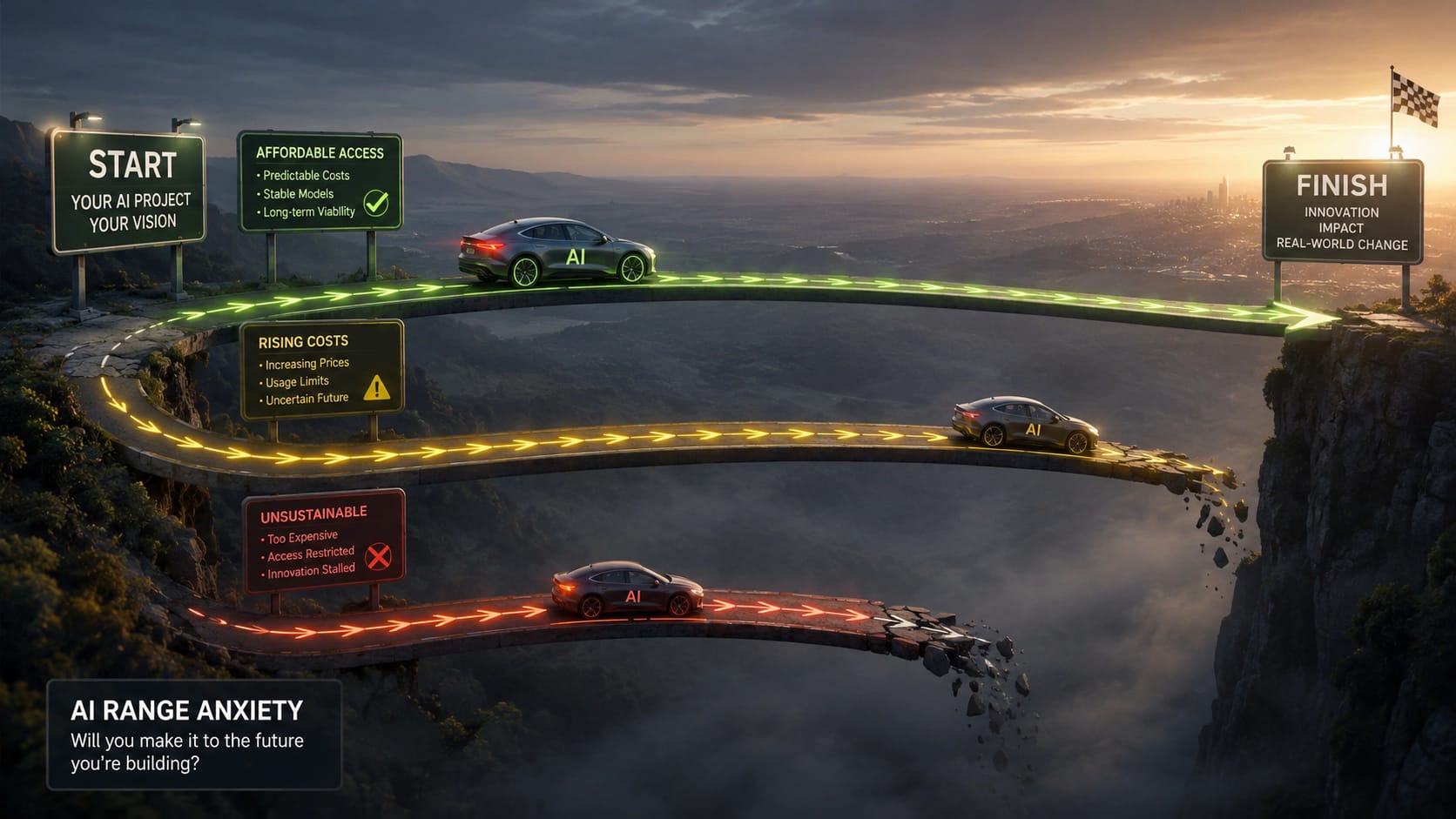
AI Range Anxiety: Will Rising AI Costs Slow Innovation?
Artificial intelligence has transformed the way developers, researchers and creators work. But as AI becomes an essential tool, a...

Are You in Charge of Your AI – Or Is AI in Charge of You?
Artificial Intelligence can improve efficiency and reduce costs, but are you still making the decisions? Discover how businesses...
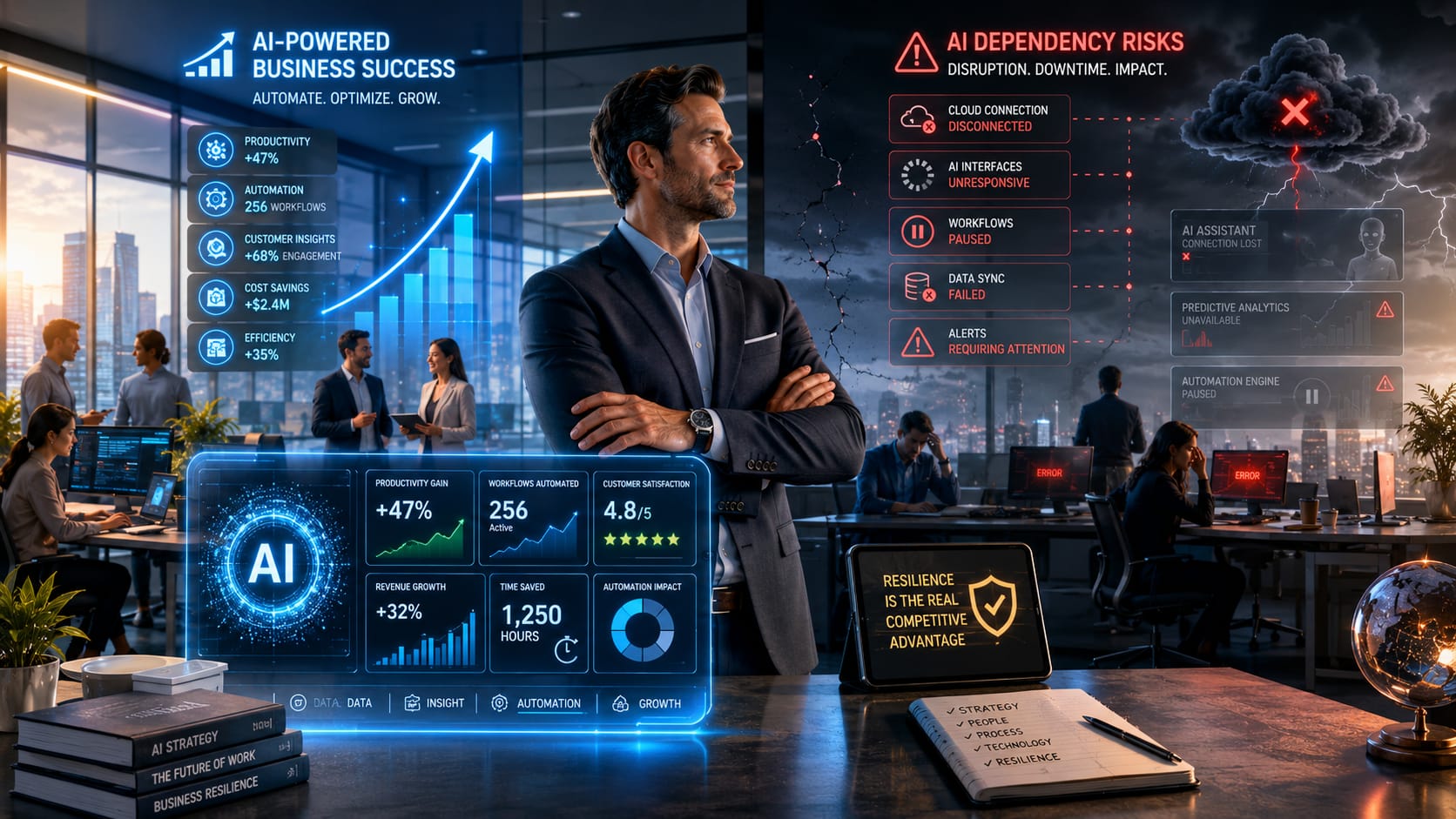
AI Can Transform Your Business – But What Happens When It Fails?
Artificial Intelligence can transform productivity, efficiency and customer service, but over-reliance creates new business risks....
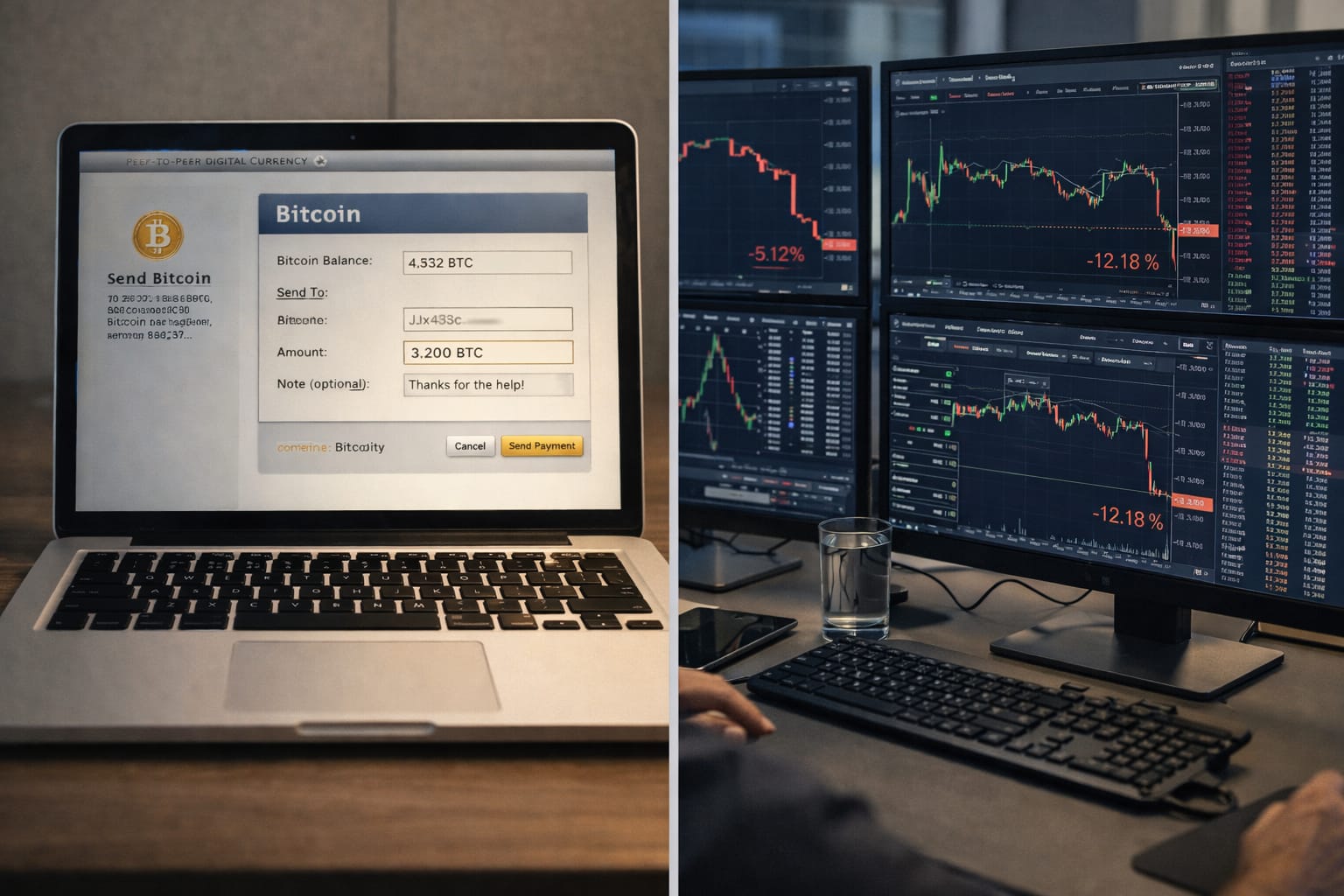
From Digital Currency to Volatility Engine: What Crypto Became in the Age of AI
Crypto began as a decentralised currency experiment. Today it functions as a high-volatility speculative market, now accelerated...
When AI Catches the Flu: Why Backup, Recovery, and Resilience Mean Something Different for Intelligent Systems
When AI replaces human systems, failure changes shape. This article explores what happens when AI “gets sick,” why it can’t be...
AI, Automation and the Unfunded Shock
As AI and robotics accelerate, universal income is often presented as inevitable. This article explains why UBI is financially...

AI Questions and Answers section for The Invisible Battlefield: How AI Trading Bots Could Turn Geopolitical Conflict into Financial Shockwaves
Welcome to a new feature where you can interact with our AI called Jeannie. You can ask her anything relating to this article. If this feature is available, you should see a small genie lamp above this text. Click on the lamp to start a chat or view the following questions that Jeannie has answered relating to The Invisible Battlefield: How AI Trading Bots Could Turn Geopolitical Conflict into Financial Shockwaves.
Be the first to ask our Jeannie AI a question about this article
Look for the gold latern at the bottom right of your screen and click on it to enable Jeannie AI Chat.
Type: Article -> Category: AI Business