Type: Article -> Category: AI Business

AI Can Transform Your Business – But What Happens When It Fails?
Don't have time to read the article? View as a short video storyboard or listen to it whilst jogging.
Publish Date: Last Updated: 21st June 2026
Author: nick smith- With the help of CHATGPT
One of the oldest pieces of advice in business is remarkably simple:
"Don't put all your eggs in one basket."
The saying has survived for centuries because it contains a timeless lesson. If you place everything of value into a single basket and that basket falls, you risk losing everything at once.
Today, businesses across the world are racing to embrace Artificial Intelligence. From customer service and marketing to administration and data analysis, AI promises increased productivity, reduced costs and improved efficiency.
For many organisations, those promises are becoming reality.
However, amid the excitement, some business owners may be overlooking a new and potentially serious risk: becoming too dependent on AI.
The question is no longer whether AI can help your business.
The question is:
What happens when it doesn't?

The AI Gold Rush
Artificial Intelligence has quickly moved from being a technology discussed mainly by academics and technology companies to becoming a tool available to almost every business.
Today, AI can assist with:
- Customer support
- Content creation
- Marketing campaigns
- Data analysis
- Recruitment screening
- Software development
- Administrative tasks
- Document processing
- Business research
The benefits can be substantial.
Tasks that once took hours can now take minutes. Businesses can process more information, respond to customers faster and automate repetitive work that previously consumed valuable staff time.
It is easy to see why organisations are eager to adopt AI.
Unfortunately, some businesses are making a critical mistake.
They are confusing automation with resilience.
Using AI Versus Depending on AI
There is an important difference between using AI and depending upon it.
A business that uses AI as a tool can often continue operating if the technology becomes unavailable.
A business that has removed critical expertise, reduced staff numbers dramatically and automated key decision-making processes may find itself vulnerable if AI systems fail, change unexpectedly or become unaffordable.
The goal should not be to make your business dependent on AI.
The goal should be to make your business stronger with AI.
Those are not the same thing.
The Single Point of Failure Problem
Engineers spend decades designing systems that avoid single points of failure.
Aircraft have backup systems.
Data centres have backup power.
Banks have disaster recovery plans.
The reason is simple.
Every system eventually fails.
Yet some businesses are unknowingly creating a new single point of failure by centralising multiple operations around a single AI platform.
Imagine the following scenario.
Your business relies on AI to:
- Handle customer support
- Generate marketing content
- Analyse business data
- Process internal documentation
- Assist decision making
Everything works perfectly.
Until one day it doesn't.
Perhaps the service suffers a major outage.
What if pricing changes dramatically?
What happens when a critical feature is removed?
Perhaps your provider is acquired by another company.
Or what happens when your internet connection fails?
The question is not whether technology can fail.
Technology has always failed.
The real question is:
Can your business continue operating when it does?
The Hidden Cost of Losing Skills
One of the greatest risks associated with aggressive AI implementation is not technological.
It is human.
Many business owners view AI primarily as a way to reduce staffing costs.
While reducing repetitive workloads can certainly improve efficiency, removing too much human expertise can create long-term problems.
Every experienced employee carries knowledge that may never appear in a training manual.
They understand:
- Customer behaviour
- Business processes
- Historical decisions
- Common problems
- Workarounds
- Industry nuances
When organisations remove large numbers of skilled staff, they may also remove years or decades of accumulated experience.
Over time, remaining staff may become increasingly dependent on AI systems and lose the ability to perform tasks manually.
This creates a dangerous situation.
If the AI system becomes unavailable, the business may discover that it no longer possesses the knowledge required to maintain operations effectively.
What was once considered a cost saving can quickly become a costly vulnerability.
Will AI Reduce Costs or Increase Them?
Many organisations begin AI projects expecting immediate cost reductions.
The reality is often more complicated.
Before implementing AI, business owners should ask themselves several important questions:
- What exactly am I trying to improve?
- Which processes am I automating?
- How will success be measured?
- What will implementation cost?
- What ongoing costs will exist?
- What training will staff require?
- How much management time will be involved?
Businesses frequently underestimate the costs associated with:
- Staff training
- Process redesign
- System integration
- Data preparation
- Compliance reviews
- Security assessments
- Ongoing subscriptions
In some cases, AI delivers substantial savings.
In others, the costs may outweigh the benefits.
The difference often comes down to planning.
Vendor Risk: What If Your AI Provider Disappears?
Many businesses assume their AI providers will always be available.
History suggests otherwise.
The technology industry is filled with examples of products and services that were once considered essential before being discontinued, acquired or fundamentally changed.
Many AI companies are currently investing heavily in growth and infrastructure while operating in an extremely competitive market.
The AI landscape is changing rapidly.
Before committing critical business functions to a particular platform, consider:
- What happens if pricing increases?
- What happens if features are removed?
- What happens if the provider changes direction?
- What happens if the company is acquired?
- What happens if the service closes?
If your business depends heavily on a single provider, these questions become extremely important.
The Compliance and Liability Question
AI can generate impressive results.
It can also generate mistakes.
Who is responsible if AI provides incorrect information to a customer?
Who is liable if an AI-generated document contains errors?
Who answers to regulators if AI makes a decision that breaches compliance requirements?
The answer is usually straightforward.
Your business remains responsible.
AI may assist with decision-making, but accountability does not transfer to the software.
This means human oversight remains essential, particularly in industries involving finance, healthcare, legal services, insurance or regulated environments.
Trusting AI is not the same as verifying AI.
The Reputation Risk Few Businesses Consider
Customers often judge businesses by outcomes rather than explanations.
An AI-generated mistake can damage trust surprisingly quickly.
Examples might include:
- Incorrect information provided to customers
- Poorly reviewed marketing content
- Inaccurate reports
- Faulty recommendations
- Misinterpreted customer requests
A single mistake may not destroy a business.
Repeated mistakes can damage credibility and customer confidence.
Businesses should therefore view AI as an assistant rather than an infallible authority.
Human review remains one of the most valuable quality-control tools available.
Why Many Businesses Are Still Struggling to See Major AI Gains
Despite enormous investment and excitement, many economists and business analysts continue to debate the scale of productivity improvements being delivered by AI.
This does not mean AI lacks value.
It simply highlights that technology alone is rarely the complete solution.
Common reasons businesses struggle to realise expected benefits include:
- Unclear objectives
- Poor implementation
- Staff resistance
- Inadequate training
- Unrealistic expectations
- Insufficient data quality
- Lack of strategic planning
In many cases, the challenge is not the technology.
The challenge is understanding where and how to apply it effectively.
A Better Approach to AI Adoption
Businesses that achieve the greatest success with AI typically follow a balanced approach.
They:
- Start with clear business goals
- Identify specific problems to solve
- Train existing staff
- Introduce AI gradually
- Measure results carefully
- Maintain human oversight
- Create contingency plans
- Preserve critical knowledge and expertise
Most importantly, they avoid becoming completely dependent on any single technology.
AI should strengthen your organisation's resilience, not weaken it.
AI Is a Tool, Not a Strategy
Artificial Intelligence has enormous potential.
Businesses that adopt it intelligently may gain significant advantages in productivity, customer service and operational efficiency.
However, successful implementation requires far more than purchasing subscriptions and reducing headcount.
It requires planning.
It requires training.
It requires risk assessment.
And it requires contingency planning.
The businesses most likely to succeed in the AI era will not necessarily be those that replace the most people.
They will be the businesses that successfully combine the strengths of people and artificial intelligence while ensuring they can continue operating when technology inevitably fails.
After all, one of the oldest lessons in business remains as relevant today as it was centuries ago:
Don't put all your eggs in one basket.

Latest AI Business Articles
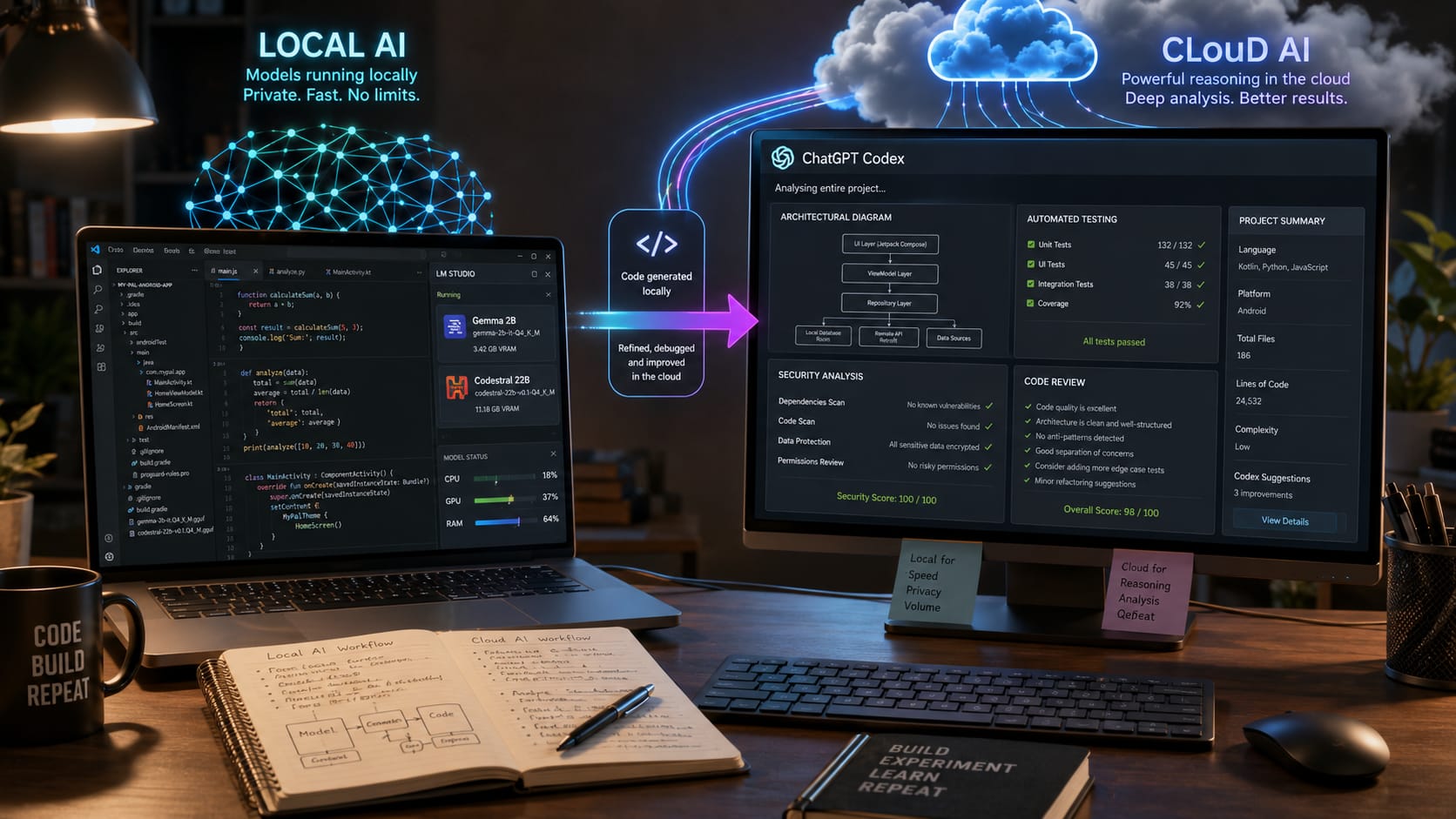
Coding with Local AI vs Cloud AI
Cloud AI transformed the way I write software, but growing projects also brought growing concerns over usage limits. After a week...
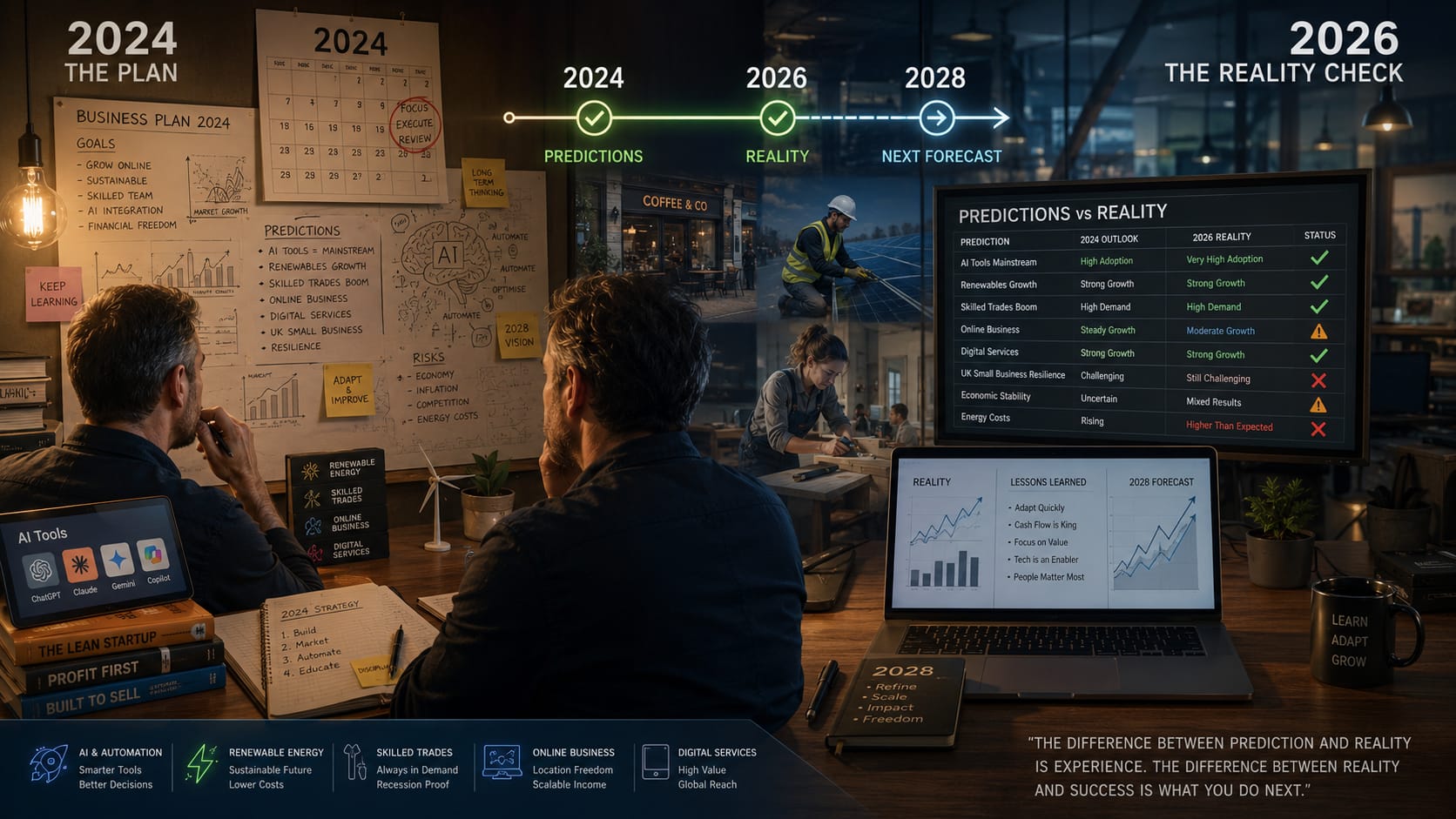
If You Wanted to Start a Business in the UK Today… Were We Right?
Two years ago, we predicted the best businesses to start in the UK. Now it's time to hold those predictions accountable. Discover...

AI Range Anxiety: Will Rising AI Costs Slow Innovation?
Artificial intelligence has transformed the way developers, researchers and creators work. But as AI becomes an essential tool, a...

Are You in Charge of Your AI – Or Is AI in Charge of You?
Artificial Intelligence can improve efficiency and reduce costs, but are you still making the decisions? Discover how businesses...

AI Questions and Answers section for AI Can Transform Your Business – But What Happens When It Fails?
Welcome to a new feature where you can interact with our AI called Jeannie. You can ask her anything relating to this article. If this feature is available, you should see a small genie lamp above this text. Click on the lamp to start a chat or view the following questions that Jeannie has answered relating to AI Can Transform Your Business – But What Happens When It Fails?.
Be the first to ask our Jeannie AI a question about this article
Look for the gold latern at the bottom right of your screen and click on it to enable Jeannie AI Chat.
Type: Article -> Category: AI Business