Type: Article -> Category: AI Business

Are You in Charge of Your AI – Or Is AI in Charge of You?
The Hidden Question Every Business Owner Should Be Asking
Don't have time to read the article? View as a short video storyboard or listen to it whilst jogging.
Publish Date: Last Updated: 21st June 2026
Author: nick smith- With the help of CHATGPT
Artificial Intelligence is rapidly becoming part of everyday business life.
AI can write emails, create marketing campaigns, answer customer questions, analyze data, generate reports and even help make strategic recommendations. Businesses that embrace AI correctly can save time, reduce costs and improve productivity.
But amid the excitement, many business owners are overlooking an important question:
Are you using AI as a tool, or are you allowing AI to make decisions for you?
The difference may determine whether AI becomes one of your greatest business assets or one of your greatest business risks.
The Calculator Problem
Most people understand the role of a calculator.
A calculator can provide answers faster than a human, but few people would blindly trust every answer without at least some understanding of the calculation itself.
AI is different.
Because AI communicates in natural language, it often creates the illusion that it understands far more than it actually does.
When an AI system produces a detailed report, writes a convincing proposal or provides a confident recommendation, it is easy to assume that the answer is correct.
The danger is that confidence is not the same as accuracy.
Many business owners are already making decisions based on AI-generated outputs without fully verifying the information being presented.
In those moments, the AI is no longer acting as a tool.
It is becoming the decision-maker.
The Gradual Transfer of Authority
The shift rarely happens overnight.
It happens gradually.
First, AI writes your emails.
Then it creates your marketing content.
Next, it begins summarizing customer feedback.
Soon it is analyzing business data and making recommendations.
Eventually, people stop asking:
"Is this correct?"
And start asking:
"What does the AI think?"
This subtle change represents a transfer of authority.
The more successful AI becomes, the more tempting it is to trust it completely.
Yet every AI system can make mistakes.
Some mistakes are obvious.
Others may go unnoticed until they have already affected customers, finances or reputation.
The Human Skill That Begins to Fade
There is another danger that receives far less attention.
Skills deteriorate when they are no longer used.
Pilots still train to fly aircraft manually.
Accountants still understand accounting principles even though software performs calculations.
Experienced business owners still rely on judgement developed over years of experience.
If every decision becomes AI-assisted, business leaders risk losing the very skills that allowed them to recognise good decisions in the first place.
The ability to critically evaluate information can slowly weaken.
Over time, businesses may become increasingly dependent on AI not because they want to be, but because they have forgotten how to operate without it.
When AI Gets It Wrong
Imagine an AI system incorrectly identifies a profitable customer segment.
A marketing campaign is launched.
Budgets are allocated.
Resources are redirected.
Months later the company discovers the original assumption was flawed.
Who made the decision?
The AI?
Or the human who accepted the recommendation without challenge?
The answer is important because responsibility can never be outsourced.
Regardless of how advanced AI becomes, business accountability remains firmly human.
Customers, regulators and shareholders will not accept "the AI told us to do it" as an excuse.
The Best Businesses Use AI Differently
The most successful businesses are unlikely to be those that surrender decision-making to AI.
Instead, they will use AI to enhance human capability.
AI can process information at incredible speed.
Humans provide experience, context, ethics and judgement.
Together they form a powerful partnership.
Separately, each has weaknesses.
The ideal relationship is not one where AI replaces human thinking.
It is one where AI challenges human thinking.
A business owner should be able to ask:
- What evidence supports this recommendation?
- What assumptions were made?
- What information might be missing?
- What are the risks if this advice is wrong?
If the answers are unclear, further investigation is required.
The New Management Skill
In the coming years, one of the most valuable business skills may not be learning how to use AI.
It may be learning how to manage AI.
The best leaders will know when to trust AI, when to question it and when to ignore it entirely.
They will understand that AI is neither magic nor infallible.
It is simply another business tool.
A very powerful tool.
But still a tool.
Final Thoughts
Artificial Intelligence is transforming business at an extraordinary pace.
The companies that benefit most will not necessarily be those with the most AI.
They will be the ones that maintain the right balance between automation and human judgement.
AI should help you make better decisions.
It should not become the decision-maker.
Because the moment you stop questioning your AI is the moment you stop being in charge.
And when that happens, the real question is no longer what your AI can do.
The real question becomes:
Who is running your business?
Latest AI Business Articles
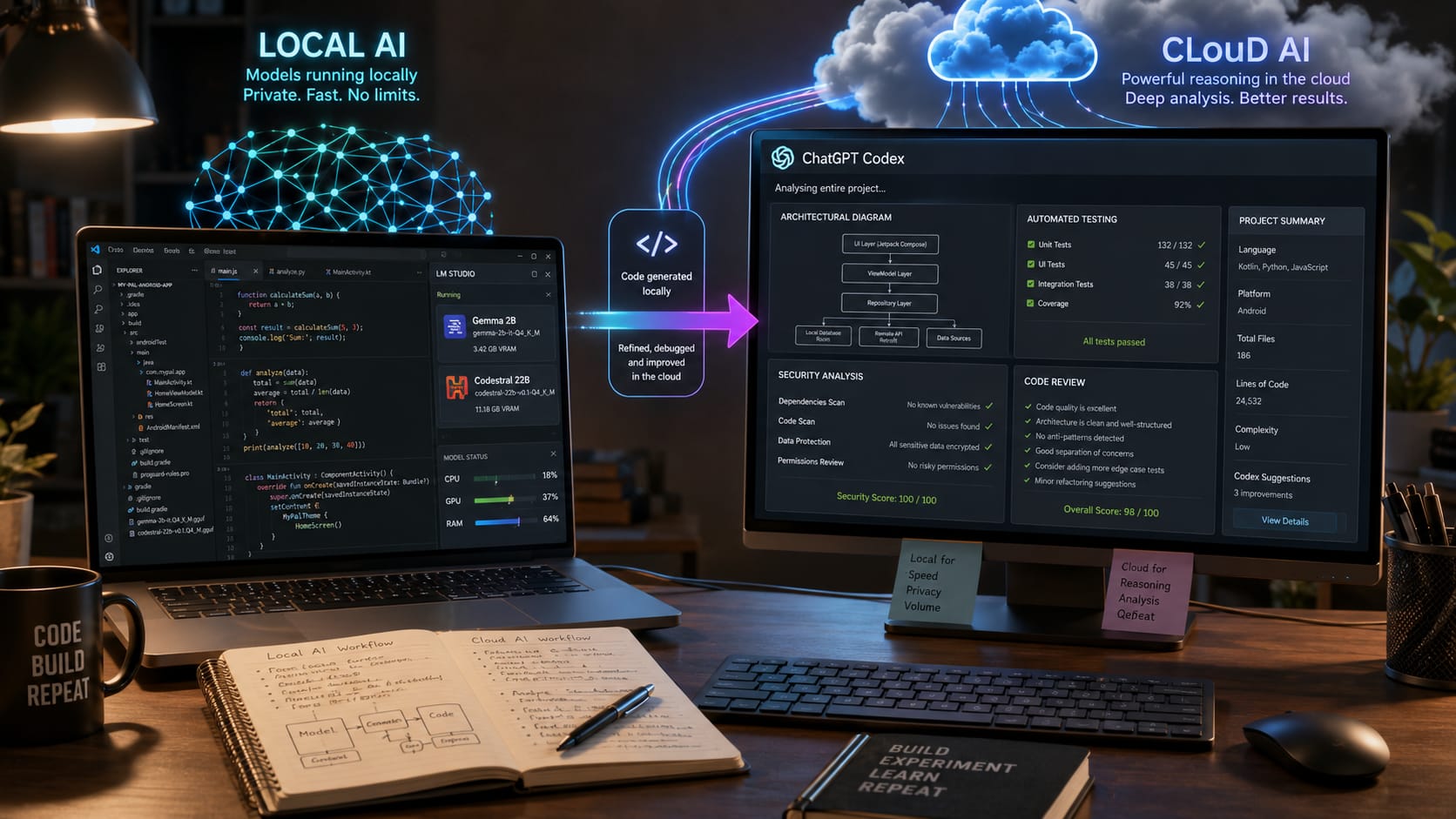
Coding with Local AI vs Cloud AI
Cloud AI transformed the way I write software, but growing projects also brought growing concerns over usage limits. After a week...
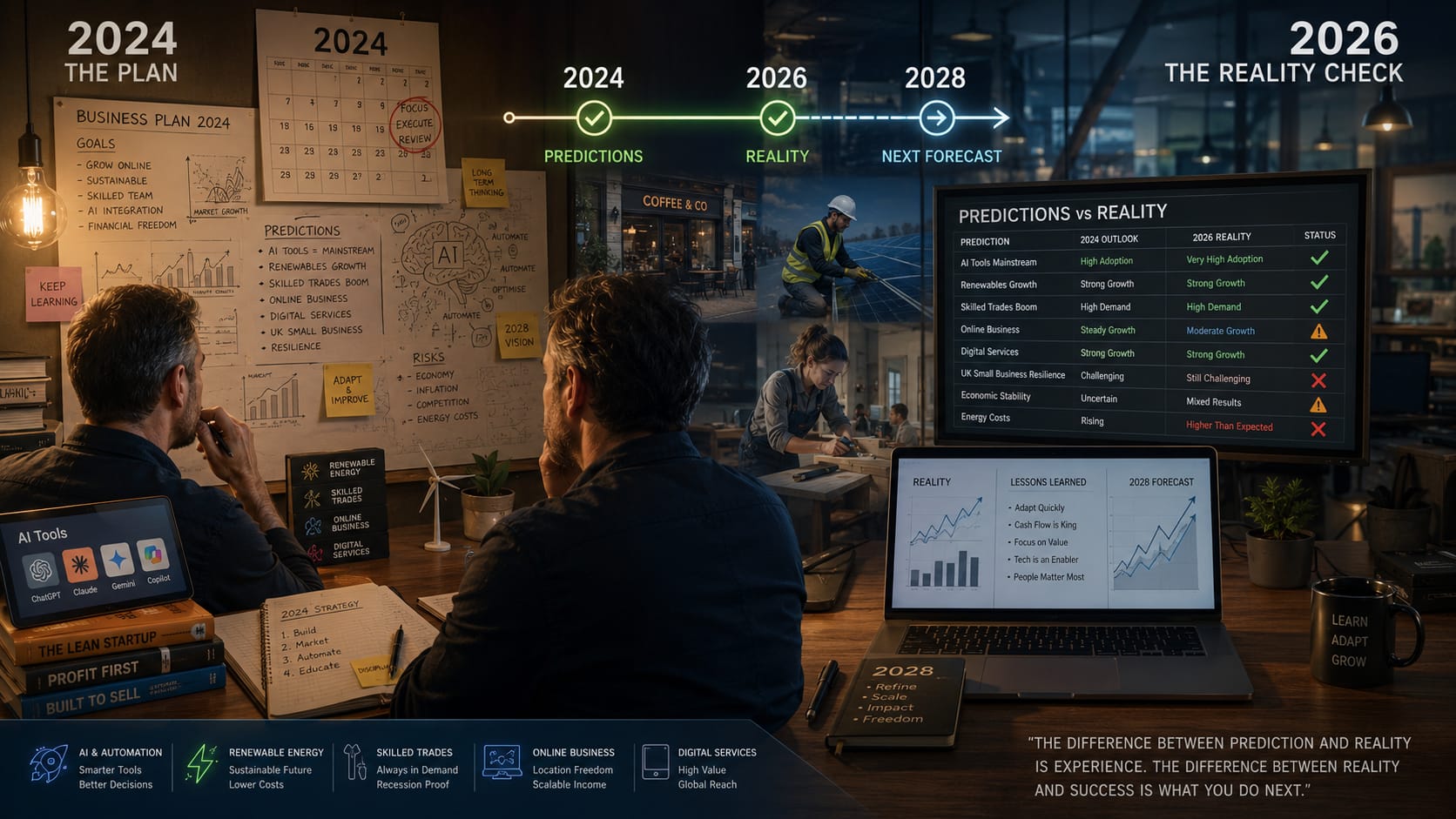
If You Wanted to Start a Business in the UK Today… Were We Right?
Two years ago, we predicted the best businesses to start in the UK. Now it's time to hold those predictions accountable. Discover...

AI Range Anxiety: Will Rising AI Costs Slow Innovation?
Artificial intelligence has transformed the way developers, researchers and creators work. But as AI becomes an essential tool, a...

AI Can Transform Your Business – But What Happens When It Fails?
Artificial Intelligence can transform productivity, efficiency and customer service, but over-reliance creates new business risks....

AI Questions and Answers section for Are You in Charge of Your AI – Or Is AI in Charge of You?
Welcome to a new feature where you can interact with our AI called Jeannie. You can ask her anything relating to this article. If this feature is available, you should see a small genie lamp above this text. Click on the lamp to start a chat or view the following questions that Jeannie has answered relating to Are You in Charge of Your AI – Or Is AI in Charge of You?.
Be the first to ask our Jeannie AI a question about this article
Look for the gold latern at the bottom right of your screen and click on it to enable Jeannie AI Chat.
Type: Article -> Category: AI Business