
Mars and the Fragility of Life
Publish Date: Last Updated: 1st March 2026
Author: nick smith- With the help of CHATGPT
For much of human history, Mars has occupied a unique place in our imagination. It is close enough to feel familiar, yet alien enough to provoke speculation. For a long time, the question was framed simply: was there ever life on Mars?
Today, a more interesting question presents itself:
If Mars could support life, why did it not persist, and what does that tell us about how rare intelligence might be in the universe?
Listen as a Podcast Discussion or watch as a Storyboard Video

Mars was not always the world we see today
Billions of years ago, Mars was very different from the cold, dry planet we observe now.
Multiple lines of evidence show that early Mars likely had:
- liquid water on its surface
- rivers, lakes, and possibly shallow seas
- a thicker atmosphere
- internal heat and geological activity
These are not speculative claims. They are supported by orbital imaging, mineral analysis, and rover data showing ancient river valleys and water-altered rocks.
In other words, Mars once met many of the basic requirements for life.
Life does not need perfection, it needs opportunity
On Earth, life appeared remarkably early. As soon as conditions allowed liquid water and chemical stability, biology emerged.
This suggests an important principle:
Life may not be rare. Stability is.
If life can arise quickly when conditions permit, then early Mars had a genuine opportunity. Even a few hundred million years, a short window in cosmic terms, may have been enough for microbial life to appear.
Mars, then, may not represent a failure of life, but a failure of longevity.
The importance of planetary “margin”
What ultimately separates Earth and Mars is not a single factor, but margin, how much room a planet has to absorb shocks and recover.
Mars faced several disadvantages:
Low gravity
Mars is much smaller than Earth. Its weaker gravity made it harder to retain a thick atmosphere over long timescales.
Loss of magnetic field
Early Mars likely had a molten iron core and a magnetic field. As the planet cooled, that dynamo shut down. Without magnetic shielding, the solar wind was free to erode the atmosphere.
Rapid cooling
Smaller planets lose internal heat faster. As Mars cooled, volcanic activity diminished, removing a key mechanism for recycling gases and stabilising climate.
None of these alone doom a planet. Together, they create fragility.
A narrow window can still host life
This is the critical point that often gets missed.
Mars did not need billions of stable years to host life, only enough time for chemistry to cross the threshold into biology.
If life did arise on Mars, it likely remained:
- microbial
- simple
- localised
When conditions worsened, that life would not have had time to adapt, diversify, or reshape the planet as life did on Earth.
Mars may have been alive, briefly.
Why intelligence never followed
Here is where discussions about “intelligent life on Mars” often go wrong.
Intelligence is not a natural endpoint of evolution. It is an accident of surplus.
To evolve technological intelligence, a planet needs:
- long-term environmental stability
- abundant energy over geological time
- ecological complexity
- time to experiment without frequent resets
Earth had all of these, and even then it took billions of years.
Mars almost certainly did not.
If a technological civilisation had ever arisen there, it would have left unmistakable evidence: orbital debris, artificial materials, long-lived structures. We see none.
That absence is not mysterious. It is expected.
Mars as a warning, not a disappointment
Mars teaches us something uncomfortable but important:
Life may be easy to start, but hard to keep going.
The universe may produce many worlds where life flickers briefly, only to vanish before complexity can take hold. Intelligence, technology, and long-lived civilisations may be the rare exceptions that require extraordinary planetary luck.
Mars is not a failed Earth.
It is a reminder of how thin the margin really is.
Earth did not just get lucky, it had redundancy
Earth’s success is not due to a single perfect parameter. It is due to overlapping safeguards:
- strong gravity
- long-lived magnetic field
- plate tectonics
- active carbon cycling
- vast oceans
When one system falters, another compensates.
Mars had fewer backups.
The broader implication
If Mars represents a common outcome, brief habitability followed by decline, then the universe may be full of worlds that almost made it.
Life may be widespread.
Intelligence may be fleeting.
Technology may be rarer still.
This reframes the search for life beyond Earth. The question is not “Does life exist elsewhere?” but:
How often does a planet stay kind long enough for life to become aware of itself?
Mars suggests: not often.
Closing reflection
Mars is not silent because nothing ever happened there. It is silent because whatever may have begun did not last.
In that sense, Mars is not a story about absence, it is a story about timing.
And it reminds us that Earth’s greatest gift may not be its position, its chemistry, or even its biology, but the simple fact that it stayed stable long enough for life to wonder where it came from.

Latest Science Articles
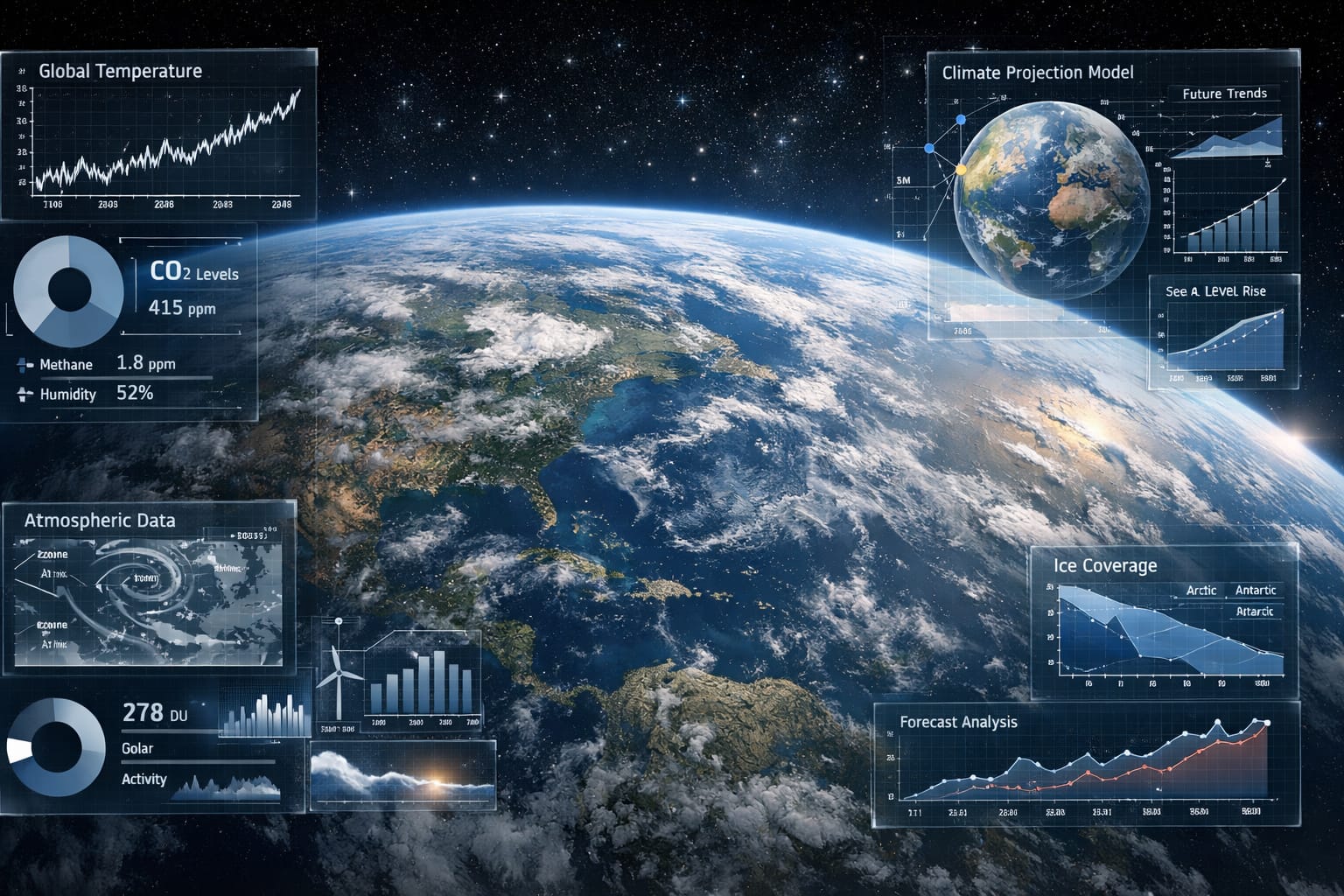
Why “Climate Change” Is the Wrong Label — And How We Can Reframe the Conversation
Is “climate change” the wrong target? Even when human CO₂ fell during COVID, methane rose due to natural processes. Maybe the real...
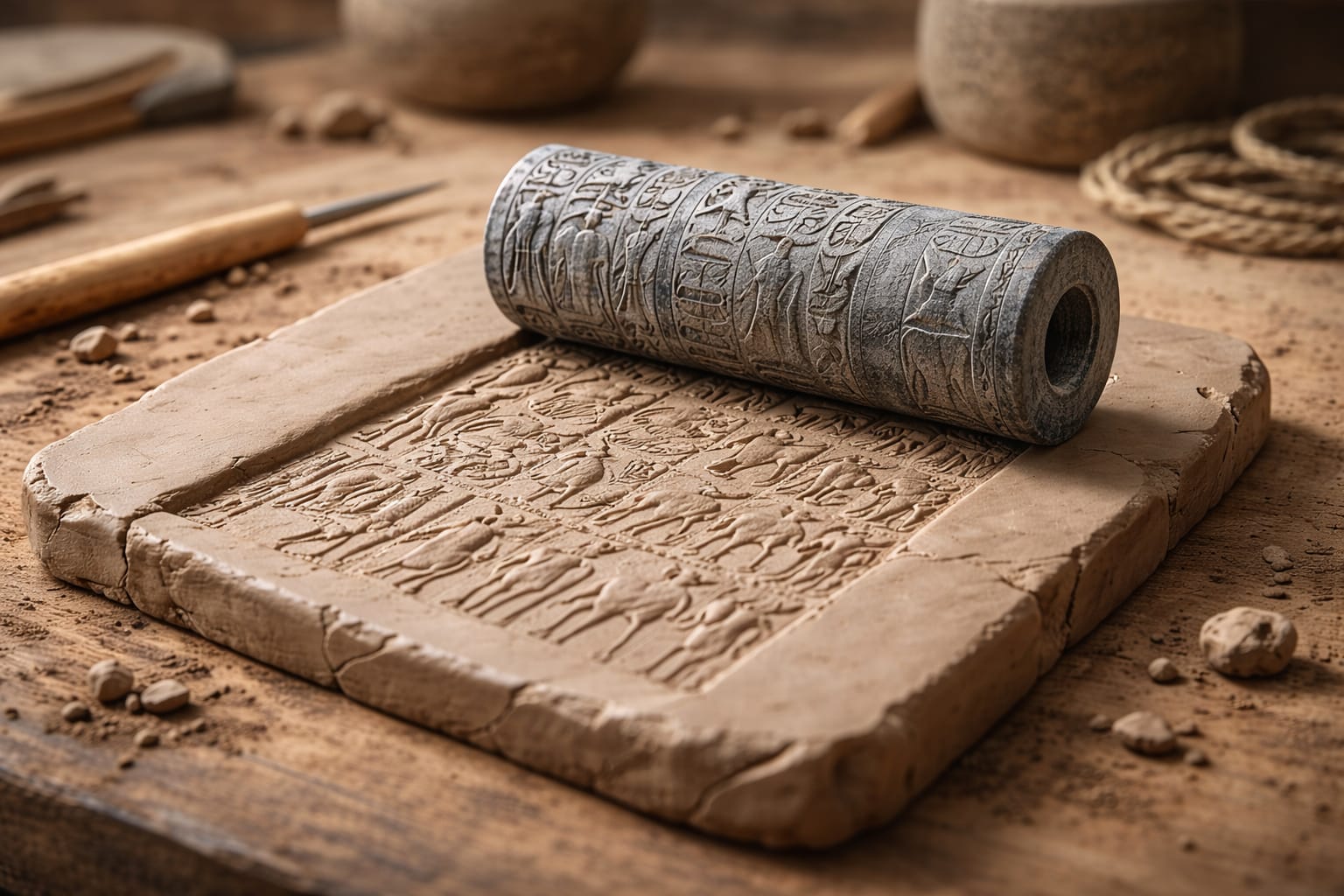
The Cylinder And The Clay; A Dimensional View Of Existence
An ancient cylinder seal reveals a striking model of existence: how information changes with dimension, why time may be a...
Compression and Release: Rethinking Black Holes, the Big Bang, and the Nature of Cosmic Expansion
This article is a philosophical exploration of cosmology and physics. It does not claim to replace established scientific models,...
Quantum Entanglement, Timeless Universes, and the Illusion of the Long Way Around
Quantum entanglement is often presented as one of the strangest features of the universe, particles separated by vast distances...
The Universe That Refuses Perfection: Light, Time, and the Pulse of Reality
Humanity’s greatest discoveries often begin with deceptively simple questions. What is light? Where does time go? Why does...

Cooling by Design: How Nature and AI Inspired a Revolutionary Data Center Architecture
Nature has an extraordinary way of solving the most complex challenges. From the intricate cooling system of the human body to the...

Net Zero: The New Religion Spreading Across the Globe
Over the past half-century, the West has witnessed a significant decline in Christian faith, leaving a spiritual and moral vacuum....
Hypothesis Overview: Light as a Particle with a Pushed Energy Wave
The original double-slit experiment, performed in 1801 by Thomas Young at the Royal Institution, showed that light acts as a wave....

AI Questions and Answers section for Mars and the Fragility of Life
Welcome to a new feature where you can interact with our AI called Jeannie. You can ask her anything relating to this article. If this feature is available, you should see a small genie lamp above this text. Click on the lamp to start a chat or view the following questions that Jeannie has answered relating to Mars and the Fragility of Life.
Be the first to ask our Jeannie AI a question about this article
Look for the gold latern at the bottom right of your screen and click on it to enable Jeannie AI Chat.