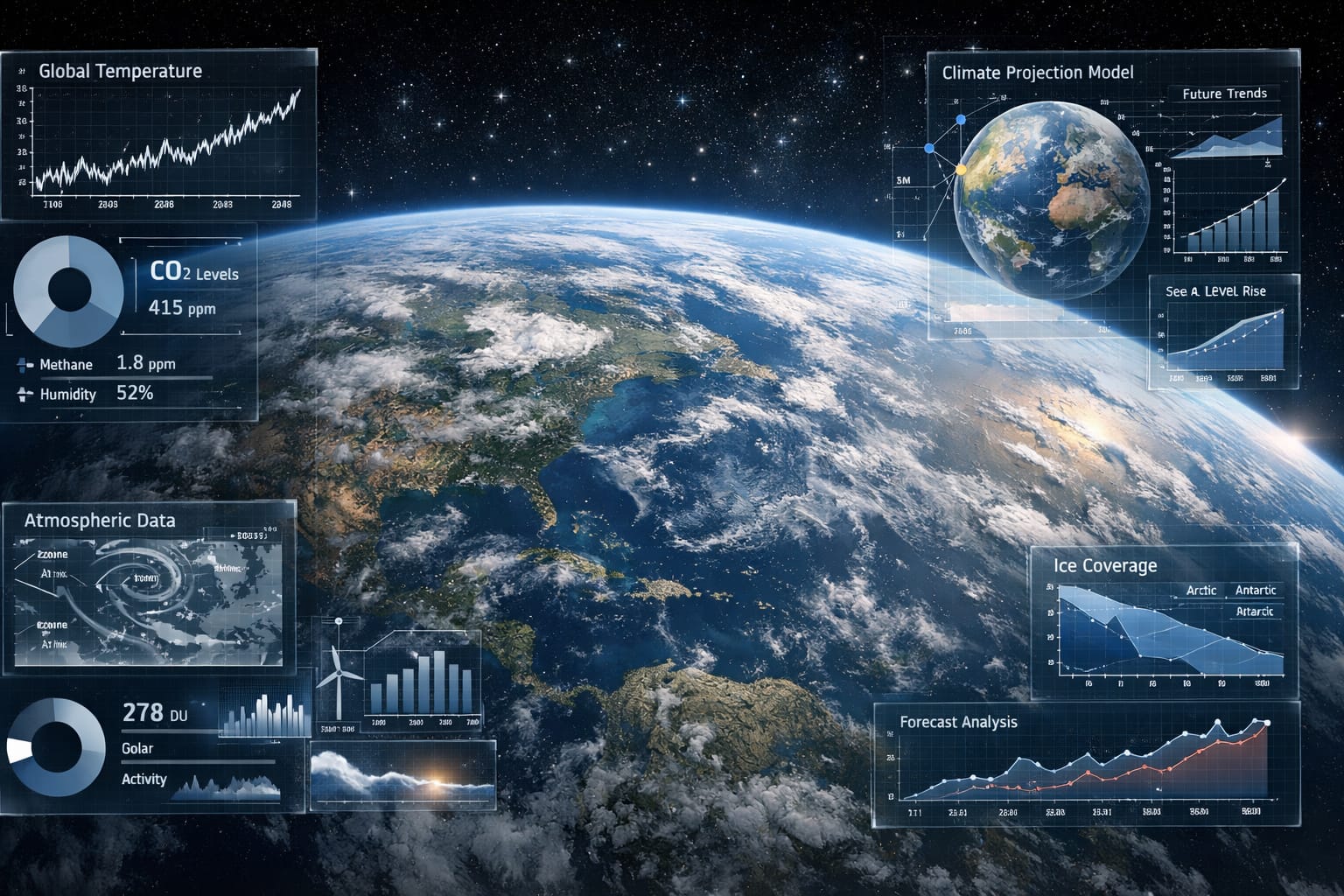
Climate Change vs Human Impact:
Why the Label May Be Hurting Climate Action
From Global Warming to Climate Change: How the Language Evolved
Can Humans Really Control the Planet’s Climate?
Why “Stopping Climate Change” Creates an Impossible Goal
Human Influence Is Real, But Control Is a Different Matter
The COVID Lockdown Paradox: Why Methane Rose While CO₂ Fell
Fewer Atmospheric “Scrubbers” and Changing Chemistry
Why Wetlands and Natural Systems Increased Emissions
What Complex Systems Teach Us About Unintended Consequences
A Better Target: Reducing Measurable Human Environmental Impact
Why Political Support Collapses When Victory Feels Unreachable
How AI Can Improve Climate Decisions Without Pretending to Control Nature
Climate Will Always Change: The Question Is How We Adapt
From Mastery to Maturity: A More Durable Environmental Mission
Publish Date: Last Updated: 13th February 2026
Author: nick smith- With the help of CHATGPT
We began with Global Warming.
It was a simple phrase: temperatures rising, driven by human activity, especially the burning of fossil fuels. But as the science advanced, reality complicated the narrative.
Some regions warmed. Others cooled. Atmospheric patterns shifted in ways that weren’t linear or uniform. What was once easy to explain became complex to describe, and so the term Climate Change supplanted Global Warming, a phrase broad enough to cover warming, cooling, and shifting weather patterns.
But in the process of becoming more scientifically accurate, this labeling may have become strategically counterproductive.

When Humans Gain the Power to ‘Manage the Climate’
The moment we believe humanity could truly manage the climate of the Earth, not merely influence it, but control it, is the moment we should worry.
Because if we can truly control vast planetary systems we do not yet understand, it will immediately be weaponized.
That’s not alarmism, that’s the history of technology. Power without humility is always misused.
But there’s a more profound reason why Climate Change is the wrong label: it describes a process without a finish line.
Climate change, by definition, is ongoing and inevitable. If humans disappeared tomorrow, climate systems would continue to evolve. Ice ages would eventually return. Oceans would rise and fall. Weather patterns would continue to shift.
In other words: climate evolves because it is a complex system, not because it is malfunctioning.
Framing the problem as “climate change”, something we must fix, sets up a goal that can never be achieved. And humans are goal-oriented beings. We need endings. We need measurable progress. We need victories.
Without this, engagement will inevitably fatigue.
We Can’t Stop Change, But We Can Reduce Impact
Let’s be clear: humans have affected the climate.
That is not controversial. A species responsible for burning enormous quantities of fossil fuels, reshaping landscapes, altering water flows, and concentrating energy use on a planetary scale will necessarily influence atmospheric chemistry.
Even without advanced scientific instrumentation, it’s common sense.
But affecting a system is not the same as controlling it. That distinction is crucial.
To understand this, look at one of the most revealing natural experiments in recent history: the global COVID-19 lockdown.
The COVID Paradox: CO₂ Down, Methane Up
When global activity plummeted in 2020, economists and scientists alike expected a straightforward result: carbon emissions drop, greenhouse gases slow their rise.
That part was true, CO₂ emissions did fall as transportation, manufacturing, and energy usage declined.
But something unexpected happened with methane, a greenhouse gas far more potent than carbon dioxide over short timescales.
According to a recent study covered by Smithsonian Magazine, atmospheric methane did not decrease during the lockdown, it increased, reaching some of the highest levels recorded in decades. The surprising rise was not from increased human emissions, but from natural sources and atmospheric chemistry feedbacks.
Two key factors were identified:
- Fewer hydroxyl radicals: These are the atmosphere’s primary “scrubbers”, reactive molecules that break down methane. With fewer pollutants from human activity, fewer hydroxyl radicals formed, allowing methane to persist longer.
- Enhanced natural emissions: Conditions such as wetter soil and warmer wetlands increased methane release from microbial action.
In other words:
Even when human activity sharply declined, methane levels rose due to natural processes and atmospheric interactions.
This paradox illustrates something fundamental: Earth’s climate system is not a simple machine with a single thermostat. It is an intertwined network of feedback loops, nonlinear responses, and emergent behaviours. Just when we think we understand one lever, another variable shifts.
Humans Are Part of the System, Not Its Master
If reducing human activity doesn’t produce straightforward results in all atmospheric variables, what does that tell us?
It tells us we have partial influence, not complete control.
And here is the key:
- Humans can reduce man-made impacts (emissions, land use change, pollution).
- But humans cannot control natural climate variability.
The climate does not stop changing if we stop burning fossil fuels. It changes because it always has, for billions of years.
So it’s not inaccurate to say that humans affect the climate, the science is clear, but it is inaccurate to pursue a societal goal of “ending climate change” as if change can be stopped.
That objective, by design, can never be achieved.
A Better Focus: Man-Made Impact
Imagine reframing the mission.
Not:
“Stop climate change.”
But:
“Reduce humanity’s measurable negative impact on the planet.”
This reframing has three advantages:
- It is achievable. Clean water, clean air, reduced waste, efficient energy, these are measurable goals.
- It is finite. You can see progress. You can audit outcomes. You can celebrate wins.
- It preserves credibility. Instead of promising control over planetary systems we barely understand, we commit to reducing harm, something windows world has done in many other domains.
Humans have solved environmental problems before, like acid rain, leaded petrol, and toxic dumping, by framing the issues in terms of impact reduction.
Why the Current Framing Is Politically Fragile
In recent years in the United States and elsewhere, political resistance has grown.
For example, landmark rulings that viewed greenhouse gases as a public health threat were overturned, not because people deny greenhouse gases exist, but because the public feels the economic and social impacts of mitigation policies are unfairly distributed.
People see costs rising, energy prices, housing costs, taxes, while outcomes remain distant and abstract.
When competing nations ignore emission standards or pursue cheap manufacturing without environmental safeguards, citizens rightly ask:
Why are we being asked to sacrifice more?
This feeling of unfairness erodes consensus.
It weakens resolve.
And in democratic societies, it reduces political support.
AI and Real-Time Decision Making
This is where artificial intelligence can play a transformative role.
Not as a controller of weather systems.
Not as some omnipotent climate optimizer.
But as a decision support engine, synthesizing data from oceans, the atmosphere, human infrastructure, energy grids, forests, transportation systems, and economic indicators.
AI can help us:
- forecast outcomes of different energy policies,
- model the impact of land use choices,
- optimise supply chains to reduce waste,
- simulate urban designs that cut emissions,
- predict how health outcomes respond to pollution.
AI does not solve climate change, but it can make our responses smarter, dynamic, and evidence-based.
That moves us away from slogans and towards decisions with visible consequences.
Climate Will Change, But Humanity Can Choose How We Respond
From Mercury to Mars to the outermost reaches of the solar system, planetary environments evolve without human input.
That is the default state of dynamic systems.
So when we talk about climate, we must be careful not to promise what cannot be delivered: the end of change itself.
Instead, let’s build a mission that:
- recognises humanity’s undeniable impact,
- focuses on mitigation where we actually can act,
- sets clear, measurable goals,
- builds trust through visible results,
- and uses advanced tools like AI to guide decisions.
This is not surrender to inevitability.
This is strategic realism.
And it may be the only way to keep the global consensus alive long enough to make meaningful progress.

Latest Science Articles

The Cylinder And The Clay; A Dimensional View Of Existence
An ancient cylinder seal reveals a striking model of existence: how information changes with dimension, why time may be a...

Mars and the Fragility of Life
For much of human history, Mars has occupied a unique place in our imagination. It is close enough to feel familiar, yet alien...

Compression and Release: Rethinking Black Holes, the Big Bang, and the Nature of Cosmic Expansion
This article is a philosophical exploration of cosmology and physics. It does not claim to replace established scientific models,...
Quantum Entanglement, Timeless Universes, and the Illusion of the Long Way Around
Quantum entanglement is often presented as one of the strangest features of the universe, particles separated by vast distances...
The Universe That Refuses Perfection: Light, Time, and the Pulse of Reality
Humanity’s greatest discoveries often begin with deceptively simple questions. What is light? Where does time go? Why does...
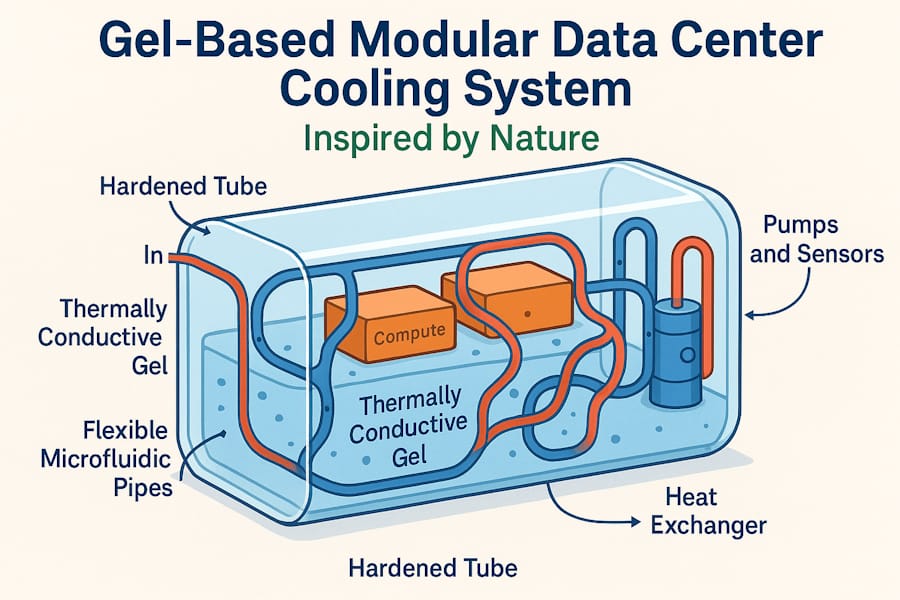
Cooling by Design: How Nature and AI Inspired a Revolutionary Data Center Architecture
Nature has an extraordinary way of solving the most complex challenges. From the intricate cooling system of the human body to the...
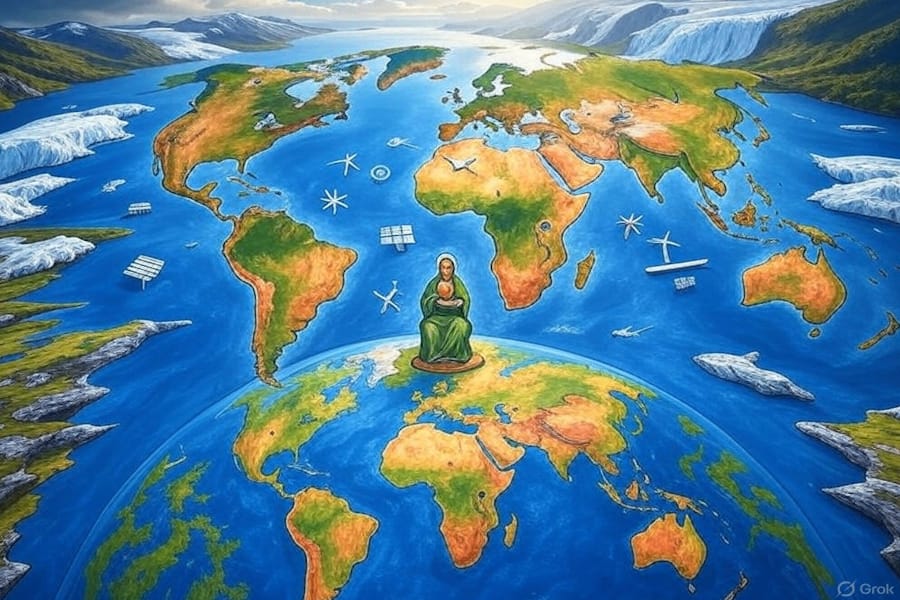
Net Zero: The New Religion Spreading Across the Globe
Over the past half-century, the West has witnessed a significant decline in Christian faith, leaving a spiritual and moral vacuum....
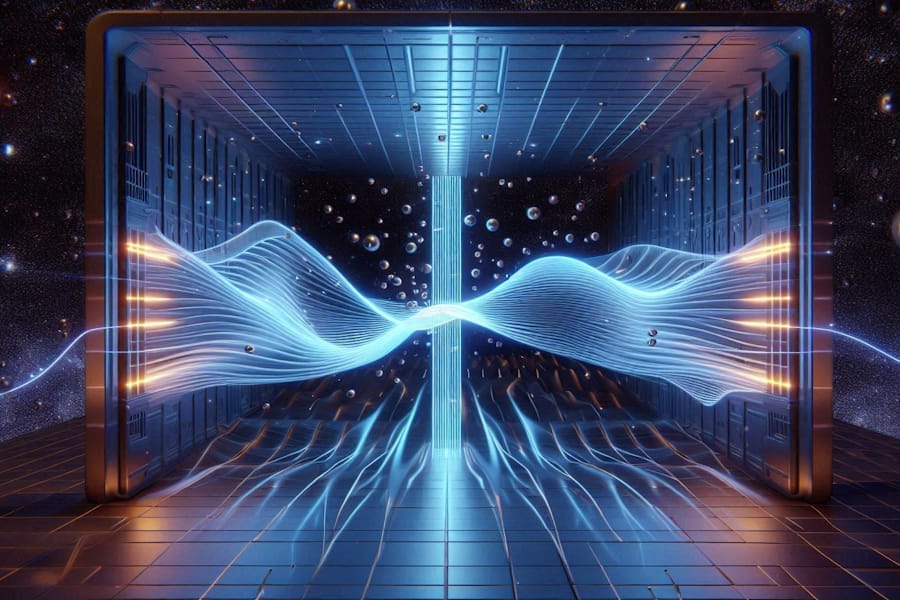
Hypothesis Overview: Light as a Particle with a Pushed Energy Wave
The original double-slit experiment, performed in 1801 by Thomas Young at the Royal Institution, showed that light acts as a wave....

AI Questions and Answers section for Why “Climate Change” Is the Wrong Label — And How We Can Reframe the Conversation
Welcome to a new feature where you can interact with our AI called Jeannie. You can ask her anything relating to this article. If this feature is available, you should see a small genie lamp above this text. Click on the lamp to start a chat or view the following questions that Jeannie has answered relating to Why “Climate Change” Is the Wrong Label — And How We Can Reframe the Conversation.
Be the first to ask our Jeannie AI a question about this article
Look for the gold latern at the bottom right of your screen and click on it to enable Jeannie AI Chat.