Type: Article -> Category: AI Business
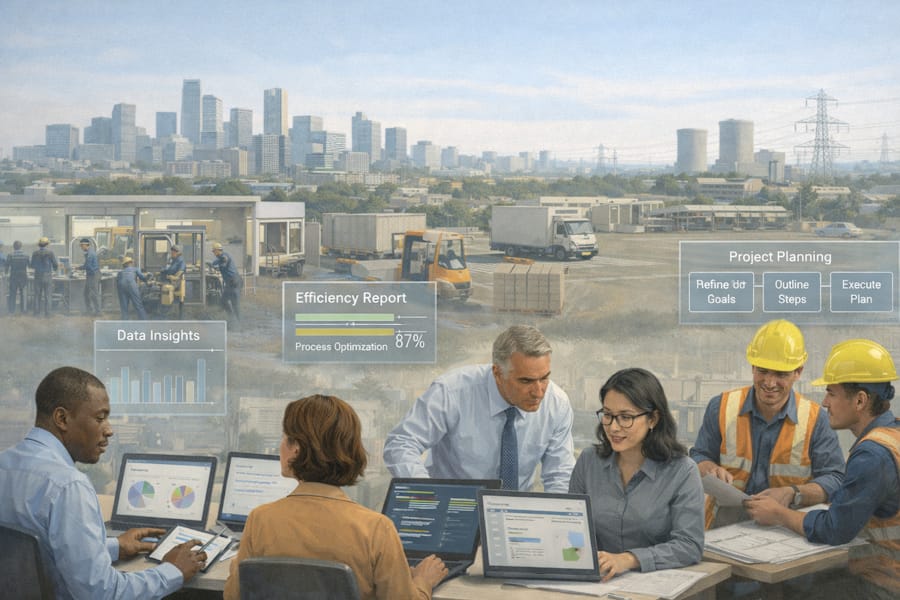
What a Resilient AI-Age Economy Would Actually Look Like
Publish Date: Last Updated: 1st March 2026
Author: nick smith- With the help of CHATGPT
Much of the debate around artificial intelligence and the economy is framed in extremes.
Either AI will usher in unprecedented prosperity, or it will hollow out the workforce and destabilise society.
Both views miss the point.
The real challenge of the AI age is not technological capability, but economic resilience. AI is neither inherently destructive nor inherently benevolent. Its impact depends entirely on the structure of the economy it is deployed into.
If recent years have shown anything, it is that economies optimised for short-term efficiency are fragile. A resilient AI-age economy must therefore be designed not just for productivity, but for diversity, redundancy, adaptability, and human oversight.

1. Economic Diversity Is the First Line of Defence
One of the clearest lessons from recent decades is that over-specialisation creates vulnerability.
Economies that rely too heavily on a single sector, whether services, finance, or technology, amplify the disruptive effects of automation. AI excels in information-based, service-oriented work, meaning service-dominant economies feel its impact first and most intensely.
A resilient AI-age economy would:
- Maintain a mixed economic base
- Balance services with manufacturing, energy, logistics, and physical production
- Avoid placing the majority of employment into roles easily automated by software
This is not a rejection of services or technology, but a recognition that economic monocultures are brittle.
2. Cheap, Stable Energy Is a Strategic Asset
AI does not operate in a vacuum. It is energy-intensive, infrastructure-dependent, and deeply tied to electricity costs.
A resilient economy treats energy not merely as a climate or market issue, but as strategic infrastructure.
This means:
- Competitive industrial energy pricing
- Grid stability and long-term planning
- Policy that balances environmental goals with economic competitiveness
Without affordable energy, both advanced manufacturing and AI-driven innovation migrate elsewhere. Resilience requires realism: an economy cannot innovate if it cannot afford to power itself.
3. Redundancy Is Not Waste, It Is Insurance
Modern economic thinking often treats redundancy as inefficiency. In reality, redundancy is what allows systems to absorb shocks.
In a resilient AI-age economy:
- Human expertise is retained alongside automation
- Institutional knowledge is not fully externalised to AI vendors
- Critical decisions always have human oversight
AI systems require auditing, interpretation, and correction. Removing human redundancy may improve short-term margins, but it increases long-term systemic risk, from silent errors to catastrophic failures.
Resilience comes from overlap, not razor-thin optimisation.
4. Jobs Must Be Designed Around Human Advantage
AI is exceptionally good at pattern recognition, synthesis, and repetition. Humans remain better at:
- Judgement under uncertainty
- Ethical reasoning
- Contextual understanding
- Interpersonal trust and accountability
A resilient economy does not attempt to compete with AI on its strengths. Instead, it restructures work to emphasise human comparative advantage.
This means:
- Fewer roles built around repetitive administrative tasks
- More emphasis on judgement, coordination, and responsibility
- Clear accountability chains where humans remain answerable for outcomes
Automation should remove drudgery, not responsibility.
5. Career Progression Must Be Rebuilt, Not Just Flattened
One of the most damaging side effects of AI-driven efficiency is not job loss, but the collapse of progression.
As organisations flatten and automate routine management tasks, traditional promotion pathways narrow. Managerial roles increasingly only become available when someone retires, leaves, or the organisation expands, events that may take years rather than months.
This creates a structural problem:
employees gain experience and responsibility, but their pay and status remain frozen because promotion is treated as the only legitimate reward mechanism.
In a resilient AI-age economy, this model no longer works.
Pay Progression Without Promotion
A more sustainable approach may involve decoupling pay growth from job titles.
This could include:
- Automatic pay increases linked to years of service, reflecting accumulated knowledge and reliability
- Annual or periodic bonuses tied to productivity gains, including savings generated by AI adoption
- Recognition of domain expertise, even where managerial headcount does not expand
In this model, employees benefit directly from the efficiencies AI creates, rather than being displaced by them.
Sharing the Gains From Automation
If AI reduces costs or increases output, resilience depends on how those gains are distributed.
Rather than using AI purely to cut labour costs, organisations could:
- Allocate a portion of AI-driven savings into staff bonuses
- Reward long-serving employees who understand systems, clients, and risks
- Maintain workforce stability even as structures remain flat
This creates alignment rather than conflict between AI adoption and workforce morale.
Why This Matters
Without alternative progression models:
- Employees stagnate in roles for years
- Graduate bottlenecks worsen
- Institutional knowledge erodes as experienced staff leave
- Productivity gains are offset by disengagement and turnover
Promotion scarcity is not a failure of ambition, it is a structural consequence of flatter organisations. Resilient economies recognise this and redesign incentives accordingly.
6. Education Must Shift From Credentials to Capability
The AI age exposes a weakness in credential-based education systems.
Degrees designed for managerial or administrative careers no longer guarantee access to those roles. Resilience requires education systems that prioritise:
- Practical competence
- Cross-disciplinary thinking
- Adaptability and systems understanding
This does not mean abandoning higher education, but aligning it with economic reality rather than past assumptions.
7. AI Governance Is an Economic Issue, Not Just a Tech One
AI governance is often discussed in ethical or technical terms. In reality, it is also about economic stability.
A resilient economy ensures:
- AI systems are auditable and explainable
- Liability remains with organisations, not algorithms
- Human review is mandatory in high-impact decisions
Unchecked automation creates hidden risks that only emerge when damage has already been done.
8. Long-Term Thinking Must Replace Short-Term Wins
Perhaps the most difficult requirement of resilience is political.
Many of the vulnerabilities AI now exposes were created by:
- Short-term economic incentives
- Policies designed for immediate gains
- Deferred costs passed to future governments
A resilient AI-age economy requires:
- Long-horizon policy planning
- Acceptance of trade-offs
- Willingness to invest in resilience even when it reduces short-term efficiency
This is not anti-technology. It is pro-stability.
Conclusion: AI Doesn’t Decide Our Future, Structure Does
AI will shape the economy. That much is inevitable.
But it will not decide whether societies thrive or fracture. That outcome depends on whether economies are designed to absorb change rather than collapse under it.
A resilient AI-age economy is:
- Diverse rather than specialised
- Redundant rather than brittle
- Human-accountable rather than fully automated
- Designed for adaptation, not just efficiency
AI is not destiny. Structure is.

Latest AI Business Articles
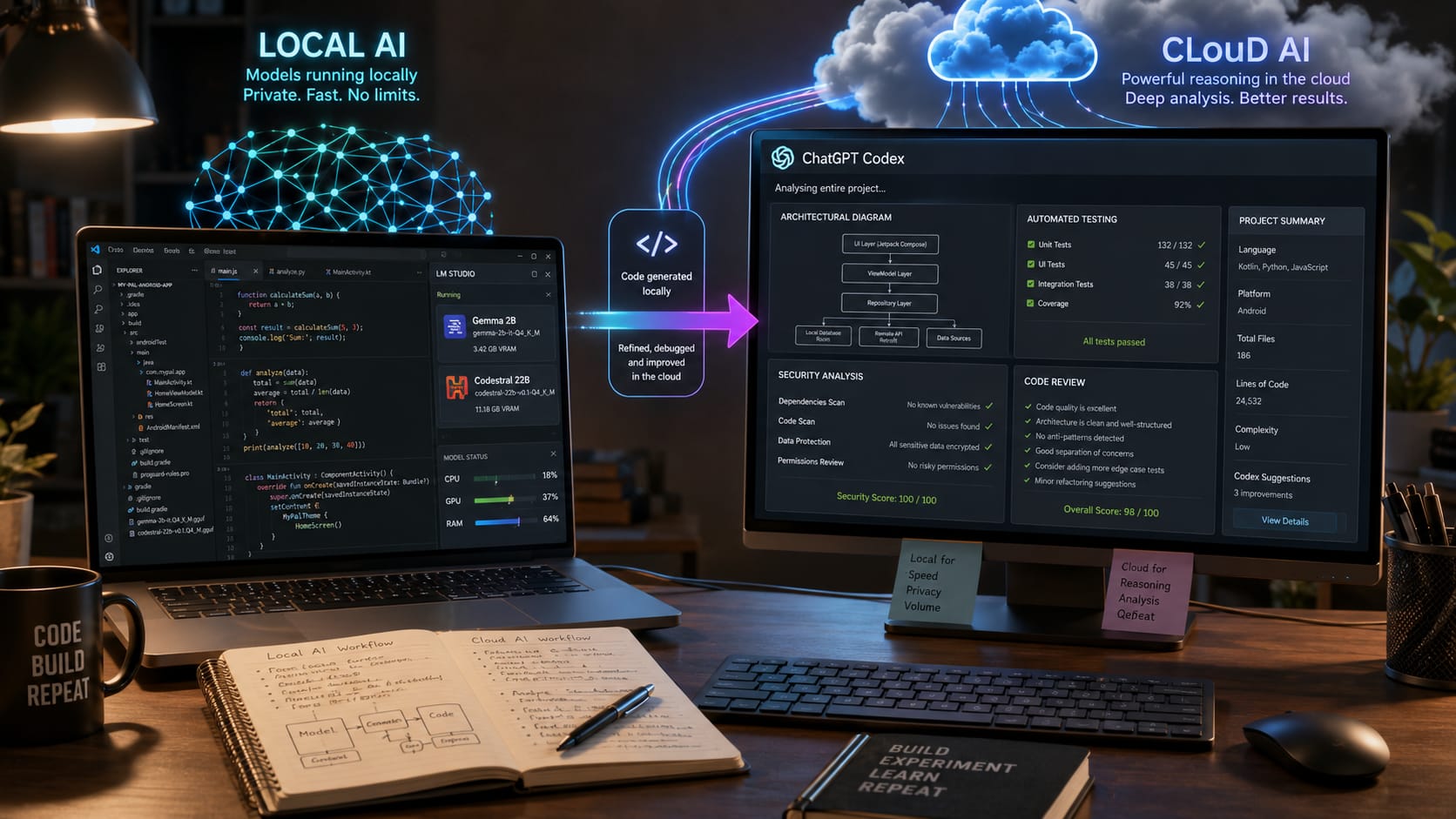
Coding with Local AI vs Cloud AI
Cloud AI transformed the way I write software, but growing projects also brought growing concerns over usage limits. After a week...
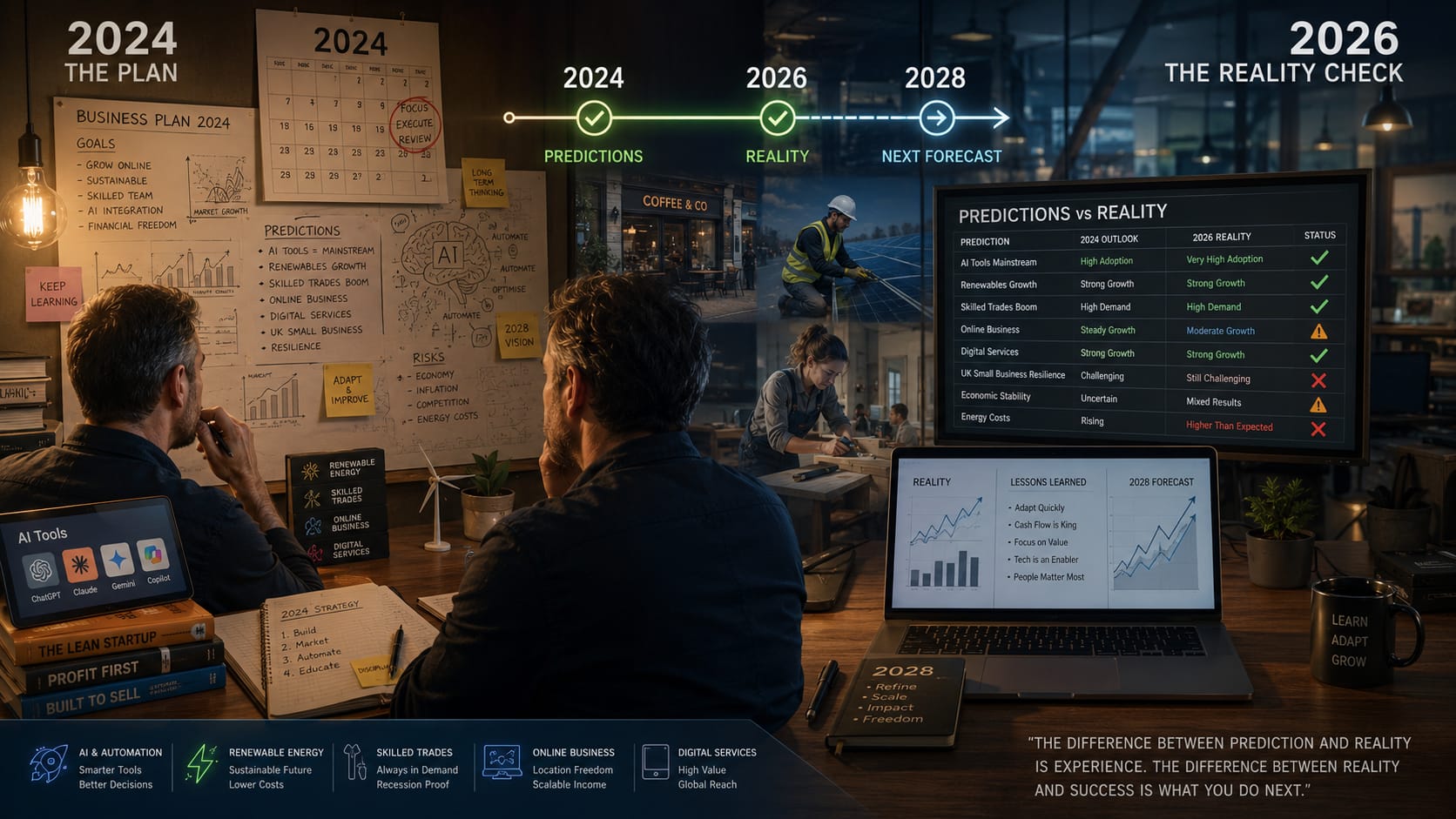
If You Wanted to Start a Business in the UK Today… Were We Right?
Two years ago, we predicted the best businesses to start in the UK. Now it's time to hold those predictions accountable. Discover...

AI Range Anxiety: Will Rising AI Costs Slow Innovation?
Artificial intelligence has transformed the way developers, researchers and creators work. But as AI becomes an essential tool, a...

Are You in Charge of Your AI – Or Is AI in Charge of You?
Artificial Intelligence can improve efficiency and reduce costs, but are you still making the decisions? Discover how businesses...
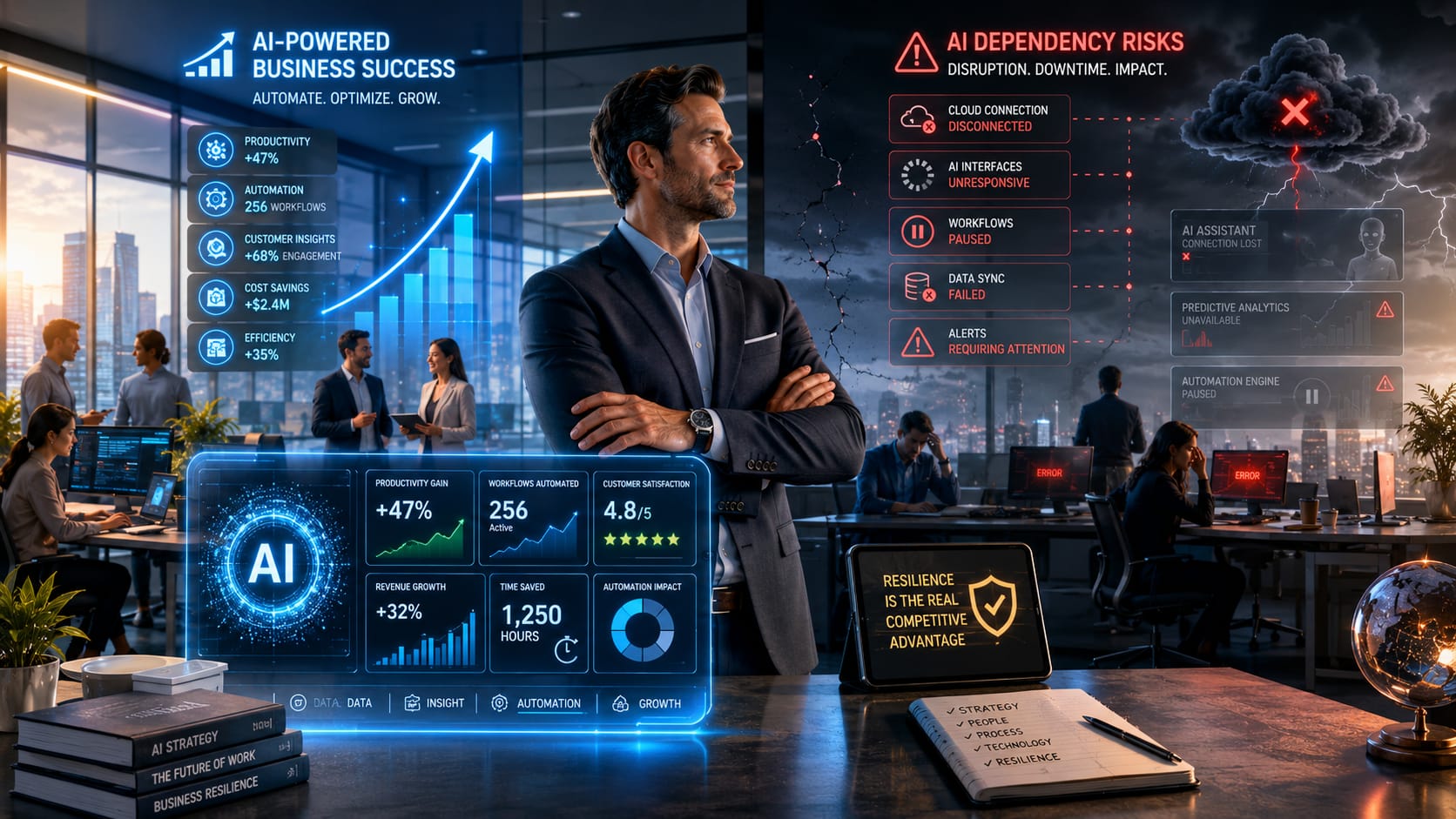
AI Can Transform Your Business – But What Happens When It Fails?
Artificial Intelligence can transform productivity, efficiency and customer service, but over-reliance creates new business risks....
The Invisible Battlefield: How AI Trading Bots Could Turn Geopolitical Conflict into Financial Shockwaves
AI trading bots now react to global news in milliseconds. During geopolitical crises, these automated systems can amplify market...

From Digital Currency to Volatility Engine: What Crypto Became in the Age of AI
Crypto began as a decentralised currency experiment. Today it functions as a high-volatility speculative market, now accelerated...

When AI Catches the Flu: Why Backup, Recovery, and Resilience Mean Something Different for Intelligent Systems
When AI replaces human systems, failure changes shape. This article explores what happens when AI “gets sick,” why it can’t be...

AI Questions and Answers section for What a Resilient AI-Age Economy Would Actually Look Like
Welcome to a new feature where you can interact with our AI called Jeannie. You can ask her anything relating to this article. If this feature is available, you should see a small genie lamp above this text. Click on the lamp to start a chat or view the following questions that Jeannie has answered relating to What a Resilient AI-Age Economy Would Actually Look Like.
Be the first to ask our Jeannie AI a question about this article
Look for the gold latern at the bottom right of your screen and click on it to enable Jeannie AI Chat.
Type: Article -> Category: AI Business