Type: Article -> Category: AI Business

AI, Pay Structures, and Morale: When Efficiency Becomes Emptiness
Publish Date: Last Updated: 1st March 2026
Author: nick smith- With the help of CHATGPT
Watch this article as a video storybooard
One of the least discussed consequences of AI adoption isn’t job loss, it’s what happens to the people who remain.
Much of the public debate focuses on whether AI will replace workers. Far less attention is paid to how AI reshapes pay, purpose, motivation, and morale inside organisations that survive the transition.
History shows that morale collapses not when people lose jobs, but when work loses meaning, reward becomes disconnected from contribution, and efficiency gains flow only upward.
AI makes that risk unavoidable.
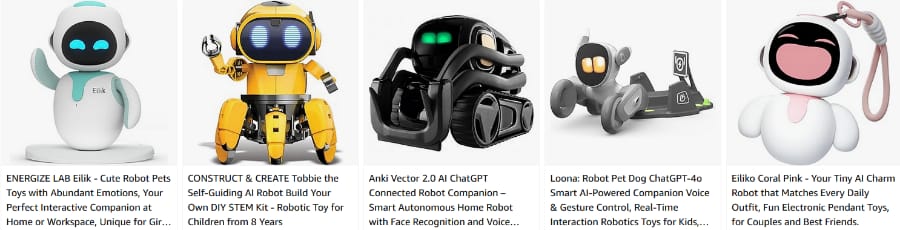
The Friday Afternoon Letter
On a Friday afternoon, just before going home, an employee is handed a letter from head office.
It reads:
Head office has made some changes which will affect your role.
As you are aware, AI is being introduced into our systems. We are pleased to confirm that your job is safe.
Unfortunately, due to the cost of implementing the new system, we have had to let go of John, Karen, and Pete.
Their roles will be replaced by an automated system known internally as “George.”
Full details of your new responsibilities will be provided on Monday.
The employee goes home, enjoys the weekend, and returns on Monday morning.
George is already there, switching on computers, scanning documents, filing reports.
When the employee logs in, a smiling interface appears:
“Welcome. I am collating the latest statistics for head office. Estimated completion time: five minutes.”
On the desk sits an envelope marked “Your New Role.”
Inside are three lines:
- 09:00, Check that George is operational
- 12:00, Take outgoing mail to the post box
- 17:00, Ensure George is docked and charging before leaving
It’s a joke.
But only just.
Because this is what happens when AI is implemented to remove cost, not to redesign human purpose.
Efficiency Without Reward Is a Morale Killer
AI delivers efficiency. That is not in dispute.
The real question is who benefits from it.
In many organisations, AI-driven gains currently flow:
- Into reduced headcount
- Into higher margins
- Into executive bonuses
- Into shareholder returns
What they rarely flow into is the lives of the remaining employees.
If AI allows one person to do the work of three, but:
- Their pay remains static
- Their responsibilities shrink rather than grow
- Their contribution becomes supervisory or ceremonial
Then morale does not improve, it collapses.
People don’t disengage because AI exists.
They disengage because their value is quietly hollowed out.
The Pay Structure Problem AI Exposes
Traditional pay models assume:
- Progression comes through promotion
- Promotion requires organisational expansion or turnover
- Responsibility scales with seniority
AI breaks this logic.
Organisations flatten. Managerial roles appear only when someone retires or leaves. Employees can remain in the same role, with increasing experience, for a decade or more.
If pay is tied solely to promotion, then AI efficiency creates a paradox:
- Workers become more productive
- Businesses become more profitable
- Employees see no financial recognition
A resilient AI-age organisation must decouple pay growth from job titles.
This means:
- Pay increases linked to years of service
- Bonuses tied to AI-driven productivity savings
- Recognition of expertise, stability, and institutional knowledge
Otherwise, AI becomes a mechanism for extracting value without sharing it.
Morale Isn’t Just About Money
Morale also erodes when agency disappears.
In poorly designed AI rollouts:
- Humans become monitors, not contributors
- Decision-making is outsourced upward or outward
- Staff exist to “keep the system running” rather than shape outcomes
This is the “George problem”.
When an employee’s primary role is to supervise a machine that does the meaningful work, something fundamental breaks, even if their job technically remains safe.
People need:
- Responsibility
- Judgement
- Accountability
- A sense that their decisions matter
AI should remove drudgery, not remove purpose.
The Hidden Morale Cost of AI Training
There is another, quieter morale issue: how AI is trained.
Many AI systems are built on:
- Human-generated data
- Labelled content
- Moderation labour
- Past work extracted without consent or compensation
Employees increasingly realise that:
- Their emails trained language models
- Their reports shaped automation tools
- Their expertise was absorbed and abstracted
When AI systems replace or diminish roles using knowledge derived from workers themselves, without recognition or reward, resentment is inevitable.
Morale suffers not because AI exists, but because value extraction feels one-sided.
What a Better Outcome Looks Like
The dystopian joke only becomes reality if organisations stop thinking beyond cost reduction.
A healthier AI adoption model would:
- Share efficiency gains with employees
- Expand human roles into judgement, quality control, and strategy
- Reward experience even without promotion
- Treat AI as a productivity multiplier, not a human replacement
In that world, George doesn’t replace people, he frees them to do work that actually matters.
Conclusion: The Real Risk Isn’t Job Loss, It’s Meaning Loss
The future most people fear isn’t unemployment.
It’s sitting at a desk, watching a machine do the real work, while being paid to exist on the margins of relevance.
AI will absolutely change pay structures and productivity. The danger is not that companies adopt AI, it’s that they do so without redesigning how humans are valued inside the system.
If AI efficiency produces profit without purpose, morale will collapse long before jobs disappear.
And that, more than any robot, is what truly breaks organisations.

Latest AI Business Articles
Coding with Local AI vs Cloud AI
Cloud AI transformed the way I write software, but growing projects also brought growing concerns over usage limits. After a week...
If You Wanted to Start a Business in the UK Today… Were We Right?
Two years ago, we predicted the best businesses to start in the UK. Now it's time to hold those predictions accountable. Discover...

AI Range Anxiety: Will Rising AI Costs Slow Innovation?
Artificial intelligence has transformed the way developers, researchers and creators work. But as AI becomes an essential tool, a...

Are You in Charge of Your AI – Or Is AI in Charge of You?
Artificial Intelligence can improve efficiency and reduce costs, but are you still making the decisions? Discover how businesses...

AI Can Transform Your Business – But What Happens When It Fails?
Artificial Intelligence can transform productivity, efficiency and customer service, but over-reliance creates new business risks....

The Invisible Battlefield: How AI Trading Bots Could Turn Geopolitical Conflict into Financial Shockwaves
AI trading bots now react to global news in milliseconds. During geopolitical crises, these automated systems can amplify market...

From Digital Currency to Volatility Engine: What Crypto Became in the Age of AI
Crypto began as a decentralised currency experiment. Today it functions as a high-volatility speculative market, now accelerated...

When AI Catches the Flu: Why Backup, Recovery, and Resilience Mean Something Different for Intelligent Systems
When AI replaces human systems, failure changes shape. This article explores what happens when AI “gets sick,” why it can’t be...

AI Questions and Answers section for AI, Pay Structures, and Morale: When Efficiency Becomes Emptiness
Welcome to a new feature where you can interact with our AI called Jeannie. You can ask her anything relating to this article. If this feature is available, you should see a small genie lamp above this text. Click on the lamp to start a chat or view the following questions that Jeannie has answered relating to AI, Pay Structures, and Morale: When Efficiency Becomes Emptiness.
Be the first to ask our Jeannie AI a question about this article
Look for the gold latern at the bottom right of your screen and click on it to enable Jeannie AI Chat.
Type: Article -> Category: AI Business