
What AI Knows About You: Unveiling the Profile Built from Your Interactions
Don't have time to read the article? View as a video storyboard or listen to it whilst jogging.
Publish Date: Last Updated: 11th March 2026
Author: nick smith- With the help of GROK3
Have you been using AI chatbots for an extended period? Whether it's for quick questions, creative brainstorming, or daily assistance, these tools have become integral to many lives. But have you ever paused to wonder what kind of profile the AI has formed about you based on all those inputs? Your queries, responses, and even the way you phrase things could be painting a detailed picture of your personality, interests, and habits.

In this article, we'll explore this intriguing topic. We'll start with a fun exercise you can try yourself, dive into the science behind how AI builds these profiles, discuss who might have access to this data, highlight what you need to be careful about, explain steps to take if you're unhappy with what the AI has inferred, and finally, show how you can flip the script to use AI for self-improvement, like spotting and fixing bad habits. By the end, you'll have a better understanding of your digital footprint in the AI world and how to manage it responsibly.
The Fun Exercise: Asking Your AI for a Profile
Let's kick things off with something interactive. If you've been chatting with an AI like ChatGPT, Grok, or Claude for a while, try this: Simply ask it, "Based on our interactions so far, can you create a profile of me?" Be specific if you want, ask about your personality traits, interests, or even potential career paths it infers from your conversations.
You might be surprised by the results. The AI could highlight patterns you hadn't noticed, like a tendency toward analytical thinking if you often ask for data breakdowns, or a creative streak if your prompts involve storytelling. This exercise isn't just entertaining; it's a window into how AI perceives you through the lens of your shared history. Many users report moments of self-reflection, realizing how their online behavior mirrors real-life tendencies. Give it a shot, it's a low-stakes way to peek behind the curtain.
Of course, remember that this "profile" is based solely on your interactions with that specific AI. It doesn't have access to your broader online activity unless you've shared it. But even within that scope, the insights can be eerily accurate, sparking curiosity about the underlying mechanics.
The Science Behind Your AI Profile
So, how does an AI chatbot generate such a profile? It all boils down to machine learning and data analysis. AI systems, particularly large language models (LLMs) like those powering modern chatbots, are trained on vast datasets to predict and generate responses. When you interact with them, they don't just respond, they learn from the context of your conversation history.
One key method is through implicit user profiling. Researchers have developed techniques where AI learns from large-scale dialogue histories to infer personal traits without explicit data. For instance, patterns in your language, such as word choice, sentence structure, or topic frequency, can reveal demographics, emotions, or preferences. If you frequently discuss tech gadgets, the AI might profile you as a tech enthusiast. Advanced models use this to personalize responses, making interactions feel more tailored.
The process starts with data ingestion: Your inputs are processed through the model's parameters, which number in the trillions for top systems. Machine learning algorithms then identify patterns, much like how recommendation systems on Netflix suggest shows based on viewing habits. In chatbots, this extends to building a "persona" for you, even if it's not stored permanently, it's often reconstructed on the fly from session data.
Tools like Voiceflow or custom integrations allow developers to authenticate users and pull dynamic info, enhancing profiling accuracy. However, this isn't magic; it's statistics and pattern recognition at scale. Understanding this demystifies the process and highlights why regular users might see surprisingly insightful profiles.
Who Has Access to This Data?
Now, the bigger question: Who can see this profiled data? Primarily, it's the AI provider, companies like OpenAI, xAI, or Google, that host the servers where your conversation history is stored. They use this data to improve models, often anonymizing it for training purposes. But access isn't limited to algorithms; human reviewers might audit interactions for quality control, though policies vary.
Beyond the company, potential risks include data breaches. AI systems handle massive amounts of personal info, making them prime targets for hackers. Governments or third parties could request access via subpoenas, especially in regulated sectors. Some AI tools share data with partners for analytics, as outlined in privacy policies.
On a global scale, regulations like GDPR in Europe give users rights to access or delete their data, but enforcement lags in other regions. Essentially, while the AI itself "knows" you through patterns, the raw data is accessible to the platform's operators and, potentially, others if security fails or sharing occurs.
What You Need to Be Careful About
Interacting with AI comes with caveats. First, be mindful of sharing sensitive information, personal details like health records or financial data can be inferred or stored, raising privacy risks. AI models often ingest data without explicit consent, leading to unauthorized use.
Another concern is bias: Profiles might reflect the model's training data flaws, leading to inaccurate or stereotypical inferences. Covert data collection, where AI scrapes info from conversations, amplifies this. Also, repurposing data, using it for ads or other unintended purposes, violates trust.
To mitigate, review privacy settings, avoid oversharing, and use tools with strong encryption. AI's scale magnifies traditional privacy issues, so vigilance is key.
What You Should Do If You Don't Like What the AI Has Profiled About You
If the AI's profile unsettles you, perhaps it reveals habits you'd rather keep private or makes incorrect assumptions, don't panic. Start by clearing your chat history; most platforms like ChatGPT allow deleting conversations or opting out of data usage for training.
If it's a business profile or generated description (like on Google or LinkedIn), contact support with proof to request removal or corrections. Switch to privacy-focused AIs or use incognito modes to limit profiling.
For deeper concerns, exercise your rights under laws like CCPA to request data deletion, though with LLMs, full erasure is challenging as data embeds in models. Ultimately, reflect on your interactions; adjusting how you engage can reshape future profiles. If anxiety persists, limit AI use or seek alternatives.
How You Can Use AI to Help Pick Out Bad Habits and More

On a positive note, AI isn't just a profiler, it's a tool for self-improvement. Apps like Healify use AI to track habits, identifying patterns like poor sleep or stress that fuel bad behaviors. By analyzing journal entries or daily inputs, AI spots hidden triggers and suggests replacements.
For example, one user broke a longstanding habit using AI's insights, which provided accountability and motivation beyond willpower. Tools like everkind offer AI-guided journaling and meditations tailored from your data, helping overcome overwhelm and change entrenched patterns.
AI can even detect risky behaviors in broader contexts, like spotting unhealthy alcohol use via health records. To start, input your routines into an AI prompt: "Analyze my daily habits from this log and suggest improvements." This turns profiling into empowerment, fostering better decisions.
Conclusion
AI's ability to profile you from interactions is both fascinating and cautionary. Through simple exercises, we see its insights; science reveals the mechanics; and privacy discussions underscore the need for care. If unhappy, take control with deletions and adjustments. Better yet, harness AI for growth, like habit correction. As AI evolves, staying informed ensures you benefit without compromise. What profile will your next chat reveal?

Latest AI Help Articles

More Than a Chatbot: 5 Reasons Your Teen’s AI Companion is a Hidden Risk
AI companions can feel like safe spaces for teenagers, but their simulated empathy may create emotional dependency and...

How to Use AI in Your Life: A Beginner’s Guide (No Tech Skills Needed)
AI isn’t just for tech experts. Discover how artificial intelligence already influences your daily routine and learn simple, safe,...

How AI Can Help You Navigate Complex Legal Paperwork – From Investments to Benefits
Whether you're investing a large sum of money, applying for government benefits, or reviewing a mortgage contract, legal paperwork...

Understanding AI Hallucinations:Risks, Solutions, and the Human Edge in Critical Systems
AI hallucinations occur when artificial intelligence systems generate incorrect or fabricated outputs, presenting them as factual...
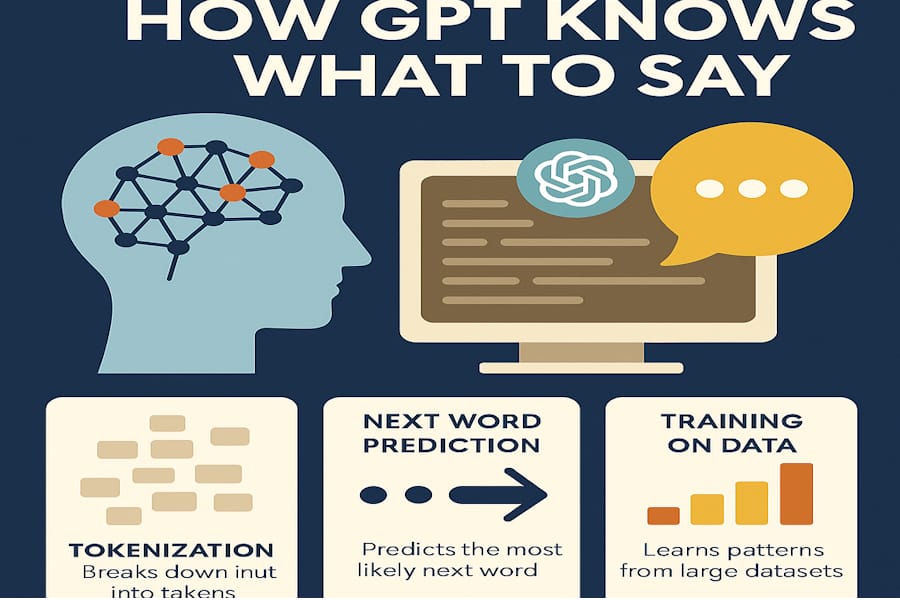
How GPT Knows What to Say
Have you ever asked GPT a question and found yourself wondering: How does it know that? It’s like talking to someone who seems to...

The Ultimate AI Terminology Cheat Sheet for Beginners (2026)
Welcome to the most comprehensive AI Terminology Cheat Sheet designed for beginners and anyone looking to demystify artificial...

Is Using AI Cheating?
Imagine being given the choice between flying the Concorde to New York and arriving in just under three hours, or taking a...

The Ethical Dilemma of Artificial Intelligence: Challenges and Responsibilities
Artificial Intelligence (AI) represents one of the most transformative technologies in human history. Its potential to...

AI Questions and Answers section for What AI Knows About You: Unveiling the Profile Built from Your Interactions
Welcome to a new feature where you can interact with our AI called Jeannie. You can ask her anything relating to this article. If this feature is available, you should see a small genie lamp above this text. Click on the lamp to start a chat or view the following questions that Jeannie has answered relating to What AI Knows About You: Unveiling the Profile Built from Your Interactions.
Be the first to ask our Jeannie AI a question about this article
Look for the gold latern at the bottom right of your screen and click on it to enable Jeannie AI Chat.