**When Waste Is Not Waste:
AI, Sustainability, and the Cost of Designing for Disposal**
Publish Date: Last Updated: 17th February 2026
Author: nick smith- With the help of CHATGPT
Listen as a Spotify Discussion Or watch as a YouTube Video
The problem AI forces us to confront
Artificial Intelligence is often discussed in terms of:
- capability
- disruption
- efficiency
- power consumption
But AI quietly exposes a far deeper flaw in how humans design systems:
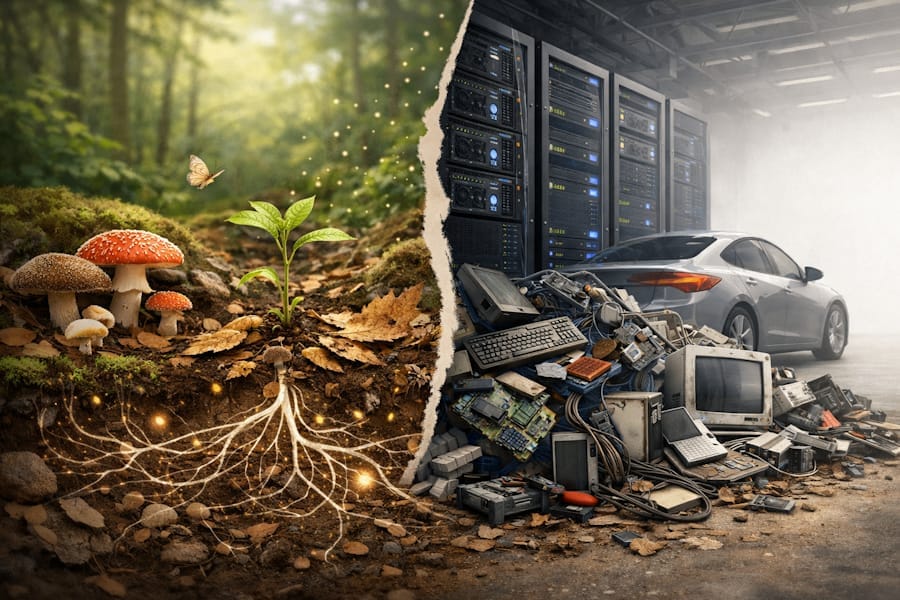
We are exceptionally good at creating things, and exceptionally poor at deciding what they become next.
Nature never makes this mistake.
AI, by its very scale and speed, makes it impossible to ignore.

Nature’s rule: nothing is ever finished
In natural systems:
- There is no “end of life”
- There is no landfill
- There is no final product
Everything is:
- transformed
- repurposed
- absorbed
- reused
Waste is simply a resource waiting for context.
This is not environmental idealism.
It is survival mathematics.
Human design breaks at the moment of success
Human engineering consistently fails at one point:
The moment something still works, but no longer fits the economic model.
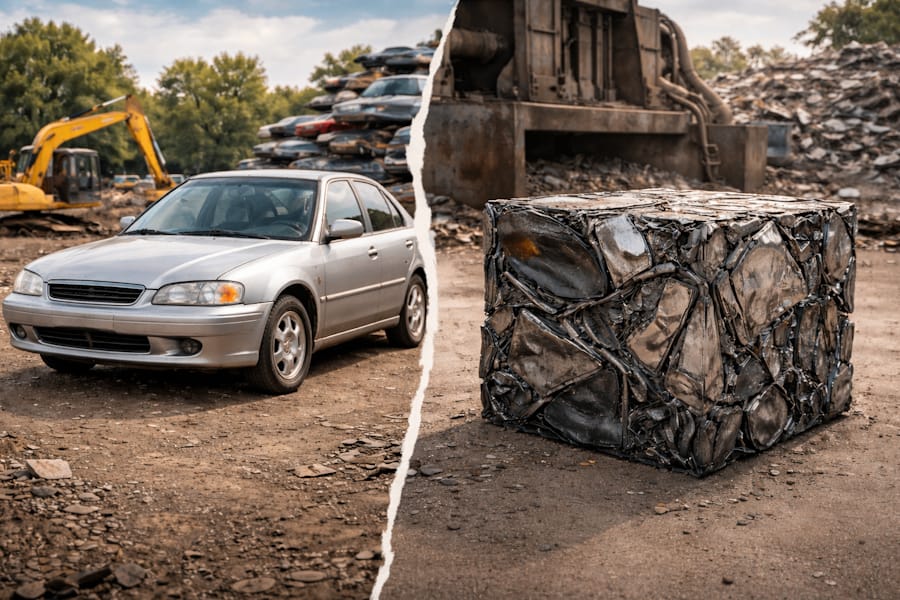
Perfectly serviceable vehicles are scrapped.
Not because they cannot function; but because they no longer align with regulation, fashion, incentives, or profit cycles.
This is not sustainability failure.
It is design failure.
Nature would never discard a functioning structure simply because it no longer matched the current trend.
The vehicle paradox: a case study in ecological farce
Cars are among the most resource-intensive objects humans create:
- vast material extraction
- enormous energy input
- complex global supply chains
And yet:
- structurally sound vehicles
- mechanically repairable
- functionally adequate
…are destroyed rather than repurposed.
Why?
Because our system:
- optimises for replacement
- not continuity
- not adaptation
- not reuse
Nature never scraps a working limb.
It modifies it.
AI and GPUs: the same mistake, accelerated
AI brings this failure into sharp focus.
Today’s AI boom relies on:
- vast GPU clusters
- enormous energy input
- rare earth materials
- highly specialised silicon
But AI evolves rapidly.
In a few years:
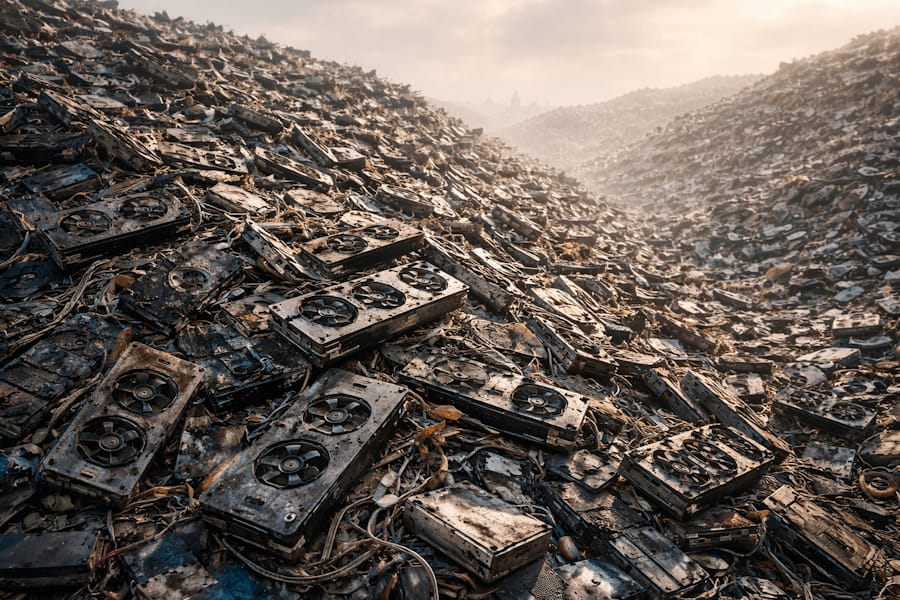
- today’s cutting-edge GPUs will be “inefficient”
- commercially obsolete
- economically sidelined
And the question becomes unavoidable:
Where do they go?
If the answer is:
- landfill
- low-grade recycling
- export as waste
…then AI is not a future technology.
It is simply another acceleration of the same old mistake.
Nature would never scrap compute, it would downgrade it
In biology:
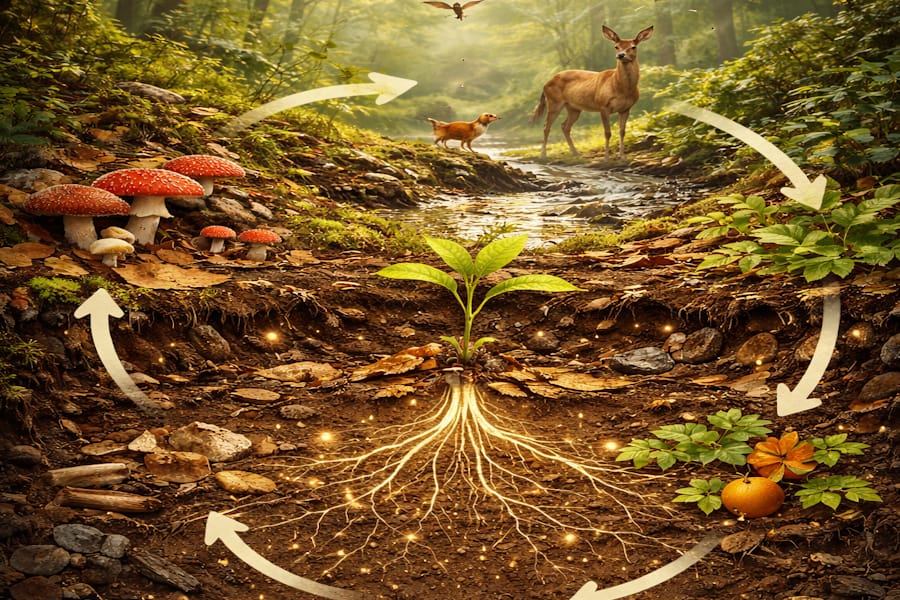
- old systems aren’t discarded
- they are reassigned
Muscle becomes structural support.
Cells shift roles.
Energy systems adapt to lower demand.
Nature doesn’t ask:
“Is this optimal?”
It asks:
“What can this still do?”
Human systems rarely ask that question.
The deeper rule AI should force us to adopt
If AI is to be sustainable, truly sustainable, then products designed by humans must obey the same rule nature does:
Design must assume there is no waste.
Only transformation.
That means:
- hardware designed for secondary roles
- modular reuse, not monolithic disposal
- planned downgrading, not forced replacement
- materials chosen for reintegration, not permanence
This applies to:
- vehicles
- electronics
- infrastructure
- AI hardware itself
Sustainability is not about efficiency, it’s about lineage
Efficiency reduces harm.
It does not eliminate it.
Nature doesn’t rely on efficiency alone.
It relies on continuity.
Every component has:
- an ancestry
- a role
- and a future
Human products often have:
- a birth
- a brief usefulness
- and an ecological dead end
That is the real sustainability gap.
AI as a mirror, not a villain
AI is not the problem.
It is the accelerant and the mirror.
It shows us:
- how fast we can scale mistakes
- how quickly materials become redundant
- how fragile linear design really is
If we cannot solve the waste problem at the AI hardware level, we have learned nothing.
The unavoidable conclusion
A technology that cannot account for its own afterlife is not advanced — it is irresponsible.
Nature mastered this billions of years ago.
Not through ethics.
Not through policy.
But through constraint.
Until human design adopts the same constraint, that every output must become someone else’s input, sustainability will remain a slogan rather than a system.
When waste is not waste

Nature doesn’t survive because it avoids disaster.
It survives because nothing it creates blocks the future.
AI gives us a choice:
- repeat the mistake faster
- or finally learn the rule that made life possible in the first place
Progress isn’t measured by what we build.
It’s measured by what can still live with after we’re finished with it.

Latest Future AI Articles

What We’re Missing About Intelligence in AI
AI can answer questions with incredible accuracy—but is that true intelligence? This article explores what’s missing: continuous...

The Restaurant at the End of the AI Universe
Humanity does not need AI to destroy itself. It is already pulling AI into the oldest loop of all: fear, escalation and war. From...

The End of Conventional Operating Systems
Imagine a world where your computer doesn’t come with a rigid operating system like Windows or macOS. Instead, an intelligent AI...

Flying Cars: A Journey Through History and Into the Future
Flying cars, once the subject of science fiction and the dreams of eccentric inventors, are rapidly becoming a tangible reality....

AI Questions and Answers section for When Waste Is Not Waste: AI, Sustainability & the Future of Design
Welcome to a new feature where you can interact with our AI called Jeannie. You can ask her anything relating to this article. If this feature is available, you should see a small genie lamp above this text. Click on the lamp to start a chat or view the following questions that Jeannie has answered relating to When Waste Is Not Waste: AI, Sustainability & the Future of Design.
Be the first to ask our Jeannie AI a question about this article
Look for the gold latern at the bottom right of your screen and click on it to enable Jeannie AI Chat.