Type: Article -> Category: Smoke & Mirrors
Why the UK May Soon Be Praying for Wind
The hidden reality behind electric cars, renewable energy, and the illusion of energy independence
Don't have time to read the article? View as a short video storyboard or listen to it whilst jogging.
Publish Date: Last Updated: 18th March 2026
Author: nick smith- With the help of CHATGPT
The Comfort of the Electric Illusion
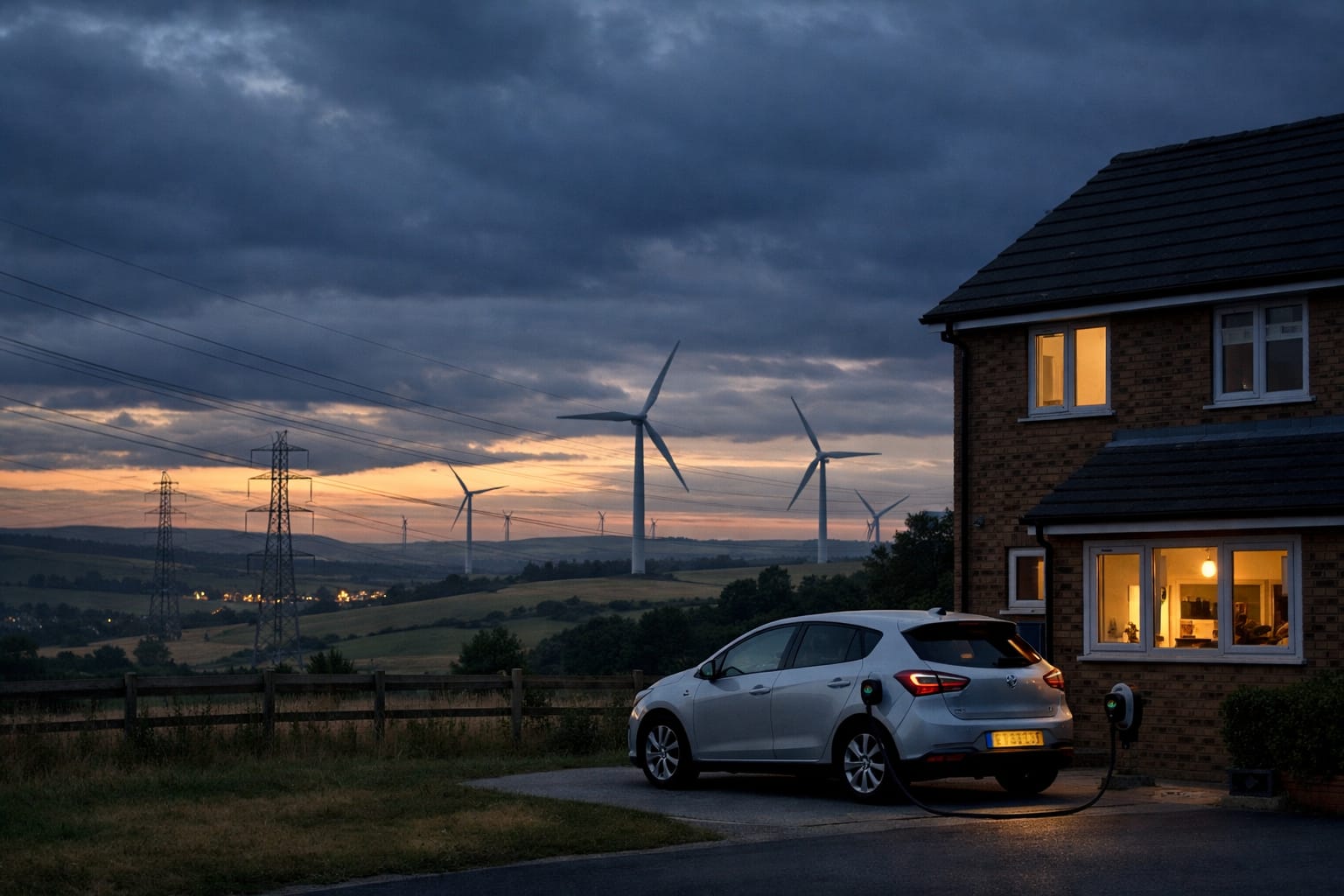
Right now, there must be some very smug electric car owners.
Over the past few weeks, they have watched oil prices surge, driven by instability in the Middle East, with little sign of that trend reversing. And to a degree, that confidence is justified, electric vehicles offer insulation from petrol pumps and global oil shocks.
Even more so if those owners have invested in solar panels or home energy systems. On the surface, it looks like independence.
But that confidence rests on a misunderstanding.
Because if you are still connected to the grid, you are not independent of fossil fuels, you are simply one step removed from them.

The Reality Behind the Grid
The UK has made significant progress in renewable energy.
Around half of the country’s electricity now comes from renewable sources, with wind power carrying the largest share. This is a genuine achievement and a necessary step toward reducing long-term dependence on fossil fuels.
But there is a critical detail that often gets overlooked:
Renewable energy is not constant, it is conditional.
Wind depends on weather.
Solar disappears at sunset.
And when those sources fall short, something else must fill the gap.
That “something else” is still, in large part, gas.
In practice, gas-fired power stations frequently provide between 30–40% of UK electricity, particularly during periods of low renewable output. More importantly, under the UK’s pricing model, gas generation often sets the price of electricity for the entire system.
So even when renewable energy is abundant and cheap to produce, consumers still pay prices influenced by fossil fuels.
This is not energy independence.
It is energy dependency with an extra layer of abstraction.
The System Under Strain
Now consider what happens as electrification accelerates.
The UK currently has tens of millions of vehicles on the road. Even a partial transition to electric vehicles introduces a new and substantial demand on the grid.
At the same time:
- Gas boilers are being replaced with electric heat pumps
- Industry is under pressure to electrify processes
- Data centres and digital infrastructure continue to expand
All of this adds load.
The commonly proposed solution is simple:
“Smart charging and time-of-use tariffs will spread demand.”
At small scale, this works.
At national scale, it becomes far more complicated.
Shifting Demand Is Not Solving Demand
Smart systems can delay when energy is used, but they cannot eliminate the need for it.
Every electric vehicle still needs to be charged.
Every home still needs to be heated.
Industry still needs to run.
That energy must be generated somewhere, at some time.
And this leads to a structural problem:
There are only so many low-demand hours in a day, and electrification is removing them.
The End of the “Quiet Grid”
Historically, the electricity grid had natural downtime.
Night-time demand was lower.
There was space in the system.
That is now changing.
In a fully electrified future:
- Vehicles charge overnight
- Heating demand rises at night (when temperatures fall)
- Solar contributes nothing
- Wind becomes the primary renewable source, and it is variable
The result is a fundamental shift:
Night is no longer a low-demand period. It becomes a new peak.
This is where the uncomfortable reality begins to emerge.
Demand Synchronisation Risk
The real danger is not just high demand, it is aligned demand.
Consider a typical winter scenario:
- A cold evening increases heating demand
- Wind output drops across the UK
- Solar generation is zero
- Millions of vehicles are scheduled to charge overnight
These are not independent events.
They reinforce each other.
This creates what can be described as:
Demand synchronisation risk , when multiple systems draw power at the same time, while supply is constrained.
At that point, smart charging is no longer a solution. It becomes a queue.
Why Wind Becomes Critical
In this system, wind power is no longer just a contributor, it becomes essential.
It is:
- The only large-scale renewable that operates at night
- The balancing force when solar disappears
- The difference between stability and fallback to gas
And this leads to an uncomfortable truth:
In periods of low wind, the UK does not fall back on renewables, it falls back on fossil fuels.
Which brings us back to the central irony:
The more electrified the system becomes,
the more it depends on weather conditions beyond our control.
The Illusion of Market Competition
There is another layer to this problem, one that sits at the heart of the UK energy system.
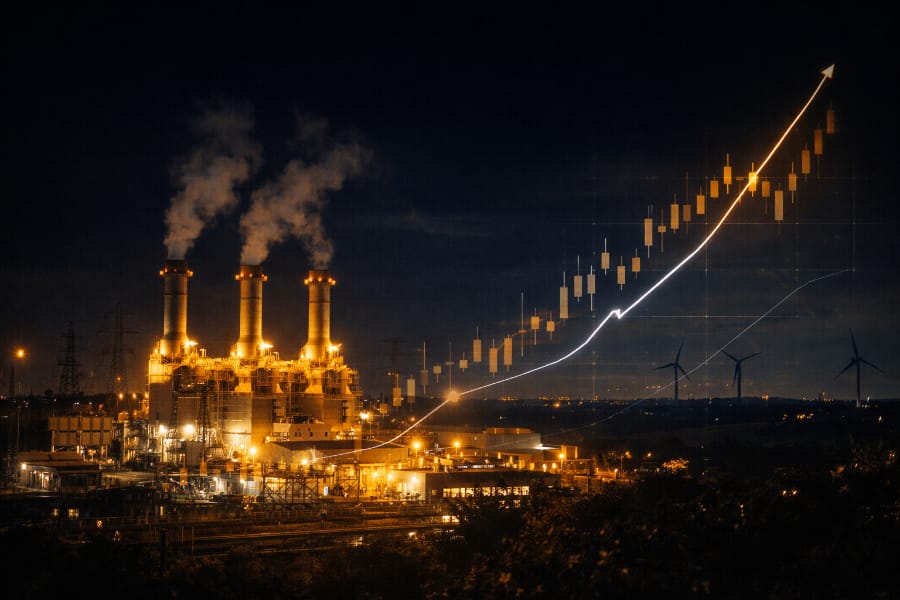
Electricity pricing is largely determined by the marginal cost of generation, which is often set by gas-powered stations.
This means:
- Even cheap renewable energy is sold at gas-influenced prices
- Consumers pay more, regardless of the actual cost of generation
- Market “competition” exists, but pricing remains structurally linked
At the same time:
- Government subsidies support renewable expansion
- Households face rising energy bills
- Infrastructure costs continue to grow
The result is a system where:
The public pays through both taxation and energy bills, while being told the market is competitive.
This is classic Smoke & Mirrors.
Energy Is Not Just an Industrial Problem

It is often assumed that high energy prices primarily affect manufacturing.
In reality, the impact is far broader.
Take a simple example: a local takeaway.
It relies on:
- Gas or electricity for cooking
- Refrigeration
- Lighting
- Supply chains dependent on transport
Multiply that across:
- Hospitality
- Tourism
- Retail
- Logistics
And you begin to see the real picture:
Energy is the foundation of the entire economy, not just heavy industry.
When energy becomes unstable or expensive, everything else follows.
The Strategic Failure
What the past decades have shown is this:
Global energy markets are inherently unstable.
Supply chains run through regions prone to geopolitical tension. Prices can shift dramatically in days. And yet, long-term resilience planning has often been secondary to short-term cost efficiency.
The UK, and much of Europe, remains exposed.
A More Realistic Approach
This is not an argument against renewables.
Nor is it an argument against electrification.
It is an argument for system design that reflects reality.
A more balanced approach would recognise:
1. A Strategic State Backbone
- Long-term investment in energy security
- Stable baseline generation (including nuclear and domestic resources)
- Infrastructure designed for resilience, not just efficiency
2. A Competitive Private Layer
- Innovation in renewables and storage
- Market-driven improvements in efficiency
- Diverse energy generation feeding into the system
The goal is not to eliminate markets, but to ensure that critical infrastructure is not left entirely to them.
The Lesson We Keep Ignoring
Energy is not just another sector of the economy.
It is the system everything else depends on.
And yet, policy often treats it as something that can be optimised, traded, or gradually improved without consequence.
The reality is far less forgiving.
If energy security is not solved, everything else becomes unstable, no matter how well-designed the rest of the system appears.
Final Thought
Smart charging may shift demand.
Renewables may reduce emissions.
Technology may improve efficiency.
But none of these remove the fundamental constraint:
Energy must be available when it is needed, not just when it is convenient to generate.
Until that problem is fully addressed, the UK risks replacing one dependency with another,
Trading the volatility of oil markets for the unpredictability of the weather.
And in that world, we may all find ourselves hoping for one thing:
That the wind keeps blowing.

Latest Smoke & Mirrors Articles

Smoke & Mirrors: Protecting Children or Building the Architecture of Digital Control?
The UK's proposed device-level nudity scanning raises important questions about privacy, age verification, false positives,...

When Humans No Longer Believe Anything
AI can now fabricate reality at scale—but the real danger is the collapse of trust. As synthetic content floods the internet, can...

Knowing About AI Is Not the Same as Using It
In the AI age, familiarity is often mistaken for expertise. This article explores the growing gap between knowing about AI and...
Smoke & Mirrors: The Myth of the “AI-Only” Chatroom
A growing number of AI “chatrooms” are described as human-free spaces. In reality, humans shape the agents that speak within them....

AI Questions and Answers section for Why the UK May Soon Be Praying for Wind
Welcome to a new feature where you can interact with our AI called Jeannie. You can ask her anything relating to this article. If this feature is available, you should see a small genie lamp above this text. Click on the lamp to start a chat or view the following questions that Jeannie has answered relating to Why the UK May Soon Be Praying for Wind.
Be the first to ask our Jeannie AI a question about this article
Look for the gold latern at the bottom right of your screen and click on it to enable Jeannie AI Chat.
Type: Article -> Category: Smoke & Mirrors