Featured UK & Global AI News from AIBusinessHelp - Page 58

Alexander Kopylkov: Why the Next Wave of AI Infrastructure Is Being Built Outside Silicon Valley

Source: Menafn

View Full Article

(MENAFN - MeUp Ltd) The Bay Area captured 76% of U.S. AI funding in 2025. The other 24% is quietly building the infrastructure layer that the next decade runs on. In 2025, the world invested ...

View Full Article

Published On: 2026-06-18

Jim VandeHei: Writing with AI

Source: Axios

Authors: jim vandehei

View Full Article

Few AI use cases elicit more outrage than writing: Using AI makes writing duller ... dumber ... robotic. It kills thinking ... creativity ... originality. It produces sameness and slop! Why it matters: All that's true — if you, as the teacher or writer, allow it to be true. Lazy AI outsourcing means lazy thinking and writing. Used with persistence and skill, AI can enhance both your thoughts and expression. I'm thinking and writing more and better than ever. But I want to be frank and useful about what I've learned about writing and the limits I've hit since turning myself into an AI lab rat : Caution 1: I'm 55, a writer by training, went in aware of AI dangers, and am a prolific writer with or without it. Anyone lazily letting AI do their thinking or writing is playing with fire: You're destined to create a mushy, "blah brain." Hope the tips that follow help you build a bionic brain instead. Caution 2, from Autumn, my wife, who's more of an AI skeptic: "Don't conflate the way you write and the utility of AI to convey information with soul writing that many of us need to live, breathe and understand the world around us. Living without that is like trying to live without air for many of us — it needs to be said somehow." Between the lines: As AI tools get more powerful, Axios will stay transparent with you about how we use them. (Our website includes a detailed explanation of how we use AI in our journalism.) This column captures my latest thinking on best practices. So here's the nitty-gritty of how I use AI for writing: Set rules based on your standards, not AI's. I write into the model's memory: My writing flows from my thinking. So challenge me, never flatter me; press me with wise skepticism. Then write like me — always in Smart Brevity — to match my style. Be very precise about the writing and editing style. I have mine wired into the AI memory (just tell it to commit style to memory) and in a skills document for my AI agents. My rules: short, sharp sentences ... clinical, fact-based emphasis ... context flagged as "Why it matters" ... and supporting points stacked in bullet form in order of importance. Pour in examples. You need to feed in the original work you're most proud of. It can be as simple as diary entries, memos or a school project. Make sure your writing and editing priorities are reflected in it. I've dumped in every Axios column, memo and strategic document, as well as four books (two unreleased). Let's pause for a second. Those are very clear parameters for writing and editing with AI. That will suffice for most people in most instances. I've taken my own AI journey much further. I'm doing this to test limits and capabilities. Advanced writing with AI: Create specific advanced skills. I use both projects (mainly in Claude, but increasingly in ChatGPT) and agents (in ChatGPT's Codex). Inside projects and agents, my thinking, writing and editing files are much more specific and richer. They're called skills or instructions, depending on the platform or use case. I detail a fact-checking skill to double-check data points, then move outside the agent for another fact-check with a safety-net skill. Interact with projects and agents a lot. You need to create a conversation loop, where you get better at fine-tuning the writing output, and the AI gets better at understanding your style. It definitely gets better with time. You want to find a mind meld that serves and betters you. Put it to the test. My laboratory is my Axios C-Suite newsletter, which I publish Saturdays for CEOs and other executives. I'm testing and using two main things: I have a project inside of Claude that knows everything I've written for this audience, plus my thinking about business and leadership, and the high standards I have for ideas and data. I have a similar agent that operates autonomously, powered by Codex, that constantly scans high-quality publications, data projects and research for relevant information. It writes up ideas in my style and delivers them via email before I wake up. The items are good, smart starters or enhancers — but they're never camera-ready, at least by my standards. Push and pull — a lot. Funny thing: I write naturally in an AI kind of way — direct, sparse, lots of dashes. And AI naturally writes a lot like me (and naturally loves Smart Brevity). So I find the output often excellent, well-documented and edited better than my favorite human editor, Mike Allen. It still does weird stuff, but rarely. It's wordier and less direct than I am. Increasingly, I find myself using its edits or proposed Jim-like phrases as naturally as the notes from Mike or any other human editor. Fun new test: I'm preparing to hike Kilimanjaro, so I'm doing a lot of rucking. I've been using Claude in voice mode to have long conversations about things I want to write. I have Claude keep detailed notes, pull out my best phrases and ideas, challenge my assumptions, help organize my thinking. Then we go back and forth by voice before producing a draft column. That's how I got both the idea and the output for my " Confessions of an AI lab rat " column. The end product was a hybrid of my thinking and my best phrases alongside Claude's real-time editing and editor-like pushback. The bottom line: I hope this inspires you to try some of these discoveries yourself. Let me know what you think: finishline@axios.com . 📈 If you're a CEO or on a CEO's team: Ask to join Jim's new weekly Axios C-Suite newsletter.

View Full Article

Published On: 2026-06-18

ChatGPT now controls less than 50% of the AI assistant market

Source: Notebookcheck

Authors: jacob fisher

View Full Article

ChatGPT’s share of the AI assistant market has fallen below 50% for the first time, as rivals Google Gemini and Anthropic Claude gain ground. The report suggests users are increasingly willing to switch platforms based on trust, integration and productivity strengths.

View Full Article

Published On: 2026-06-18

AI ready data is the missing link keeping enterprise AI stuck in pilot mode

Source: Siliconangle

Authors: kelly knight

View Full Article

Enterprises have poured billions into artificial intelligence infrastructure — GPUs, cloud capacity, model tooling — yet most deployments remain mired in experimentation rather than generating measurable business value. The bottleneck is not compute. It is AI ready data. The gap between owning data and having AI ready data is proving to be the defining obstacle [...] The post AI ready data is the missing link keeping enterprise AI stuck in pilot mode appeared first on SiliconANGLE .

View Full Article

Published On: 2026-06-18

Google Gemini co-lead Noam Shazeer to join IPO-bound OpenAI

Source: New Straits Times

Authors: reuters

View Full Article

BENGALURU: Noam Shazeer, a vice president of engineering at Google and co-lead of its Gemini artificial intelligence models, said on Wednesday that he will leave the company to join IPO-bound OpenAI, the maker of ChatGPT.

View Full Article

Published On: 2026-06-18

How to turn off AI in your Google Docs - TechCrunch

Source: Google News

View Full Article

How to turn off AI in your Google Docs TechCrunch "You should arrive at the exam properly prepared, not the AI" CTech It's Travis' Turn: I don't want or need AI's 'help' Alexandria Echo Press Guide for Google Docs Users: How to Disable Gemini AI Zamin.uz

View Full Article

Published On: 2026-06-18

Shoplazza Unleashes AI to Cut Operational Friction for Aussie Side-Hustlers

Source: It비즈뉴스

Authors: itbiznews

View Full Article

With 64% of small businesses running solo, the commerce platform pivots to easing post-launch workloads and eliminating hidden app fees. SYDNEY, June 18, 2026 /PRNewswire/ -- Global AI-native commerce platform Shoplazza is targeting Australia's growing army of side-hustlers and solo founders strugg...

View Full Article

Published On: 2026-06-18

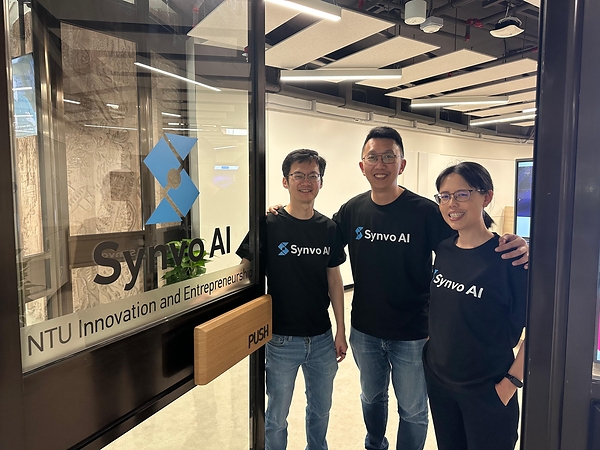
Synvo AI Raises US$1 Million to Give Enterprise AI a Memory

Source: It비즈뉴스

Authors: itbiznews

View Full Article

NTU spinout secures seed investment from Fuel Ventures Asia; early deployment cuts a manufacturer's quotation generation workflow time from 45 minutes to under 5 minutes SINGAPORE, June 18, 2026 /PRNewswire/ -- Enterprise AI has a memory problem. Every session starts blank—with no organisational co...

View Full Article

Published On: 2026-06-18

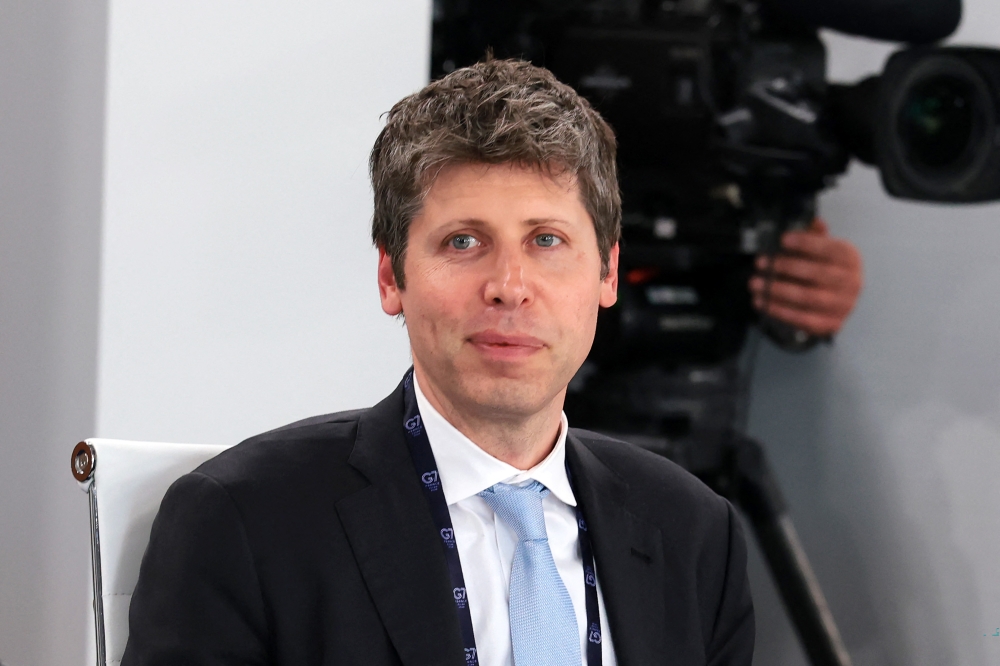
OpenAI chief Sam Altman tells G7 to ‘not cede responsibilities’ to AI giants

Source: Malay Mail

Authors: malay mail

View Full Article

EVIAN, June 18 — OpenAI chief executive Sam Altman urged world leaders at the G7 summit yesterday not to surrender...

View Full Article

Published On: 2026-06-18

Judge signals AI recruitment tool vendors like Workday may not escape liability for discrimination

Source: Computer World

Authors: taryn plumb

View Full Article

A federal judge has rebuffed Workday’s claim that it cannot be held liable under California anti-discrimination laws when its tools are used to screen (and potentially reject) job candidates in other states. This week, US District Judge Rita Lin indicated that she will likely allow additional state discrimination claims against Workday to move forward. This would significantly expand the closely-watched case and likely ratchet up scrutiny of AI recruiting tools and their potentially inherent biases when it comes to age, race, sex, disabilities, and other factors. Further, it could indicate that, even if a company is not the final employer, it may be held liable if its tools materially influence who gets rejected. This could set new legal standards for AI hiring systems, and have implications across industries, experts note. “This case reinforces the importance of actually managing AI risks,” said Valence Howden , advisory fellow at Info-Tech Research Group. “If an AI-enabled model or ATS [Applicant Tracking System] is making decisions based on historical information, it can raise questions about whether bias in outcomes and datasets has been properly addressed.” The case so far Mobley v. Workday, Inc. alleges that Workday’s AI screening tools discriminate against job seekers based on age, race, and disability. The suit was filed in 2024 in the US District Court of California by Derek Mobley, a Black disabled man over 40, who claimed Workday’s algorithms continually screened him out as he applied for more than 100 positions on the platform. The claims alleged discrimination prohibited by several US and California statutes: Race and sex under the Civil Rights Act of 1964 (Title VII); disability under the Americans with Disabilities Act of 1990 (ADA); age under the Age Discrimination in Employment Act of 1967 (ADEA); and race, gender, and age under California Fair Employment and Housing Act (FEHA). Specifically, the suit centered around Workday’s use of automated, algorithm-driven tools for applicant screening . It alleged that these systems rely on historical data and statistical modeling that can make them susceptible to existing biases, even if protected characteristics like race, age, sex, or disability are not explicitly provided. Bias may enter these systems in different ways, the plaintiffs argued, including via training data, model design, and evaluation criteria for candidate fit. The system could reproduce discriminatory outcomes by making correlations from data. For instance, years of experience on a resumé may indicate age; long employment gaps may infer a disability or caregiving responsibilities; educational and institutional affiliations could reflect race. Workday has argued that it is not subject to liability under employment statutes because it does not qualify as the job applicants’ “employer.” But federal judges have allowed key parts of the lawsuit to move forward, ruling that Workday could potentially be treated as an employer’s “agent” for the purposes of anti-discrimination law. The latest dispute centers on FEHA. According to legal sources, the California statute is among the strongest anti-discrimination laws in the US, in many cases providing broader protections than federal employment laws. Workday asked the court to dismiss claims brought under California law, saying FEHA should not apply to the hiring decisions of out-of-state employers and applicants. The company’s lawyers argued that enforcing this would effectively allow California law to supersede that of other states, just because a company used their platform. But Lin disagreed, saying FEHA does apply, and in fact, Workday is directly liable for its “own engagement in FEHA-regulated activities on the employer’s behalf.” Holding businesses liable for “their own discriminatory conduct” is within the scope and purposes of FEHA and consistent with public policy. However, the issue is still to be decided; Lin did not indicate when she would release a final ruling. Workday’s defense A Workday spokesperson called the claims in the suit “false.” “Workday’s AI recruiting tools don’t make hiring decisions and are designed with human oversight at their core,” the spokesperson told CIO. “Our technology looks only at job qualifications, not protected traits like race, age, or disability. We rigorously test our products as part of our responsible AI program to confirm our tools do not harm protected groups.” Workday’s platform is meant to provide insights on how well a candidate’s qualifications match the requirements of a posted job, the company said. Those tools focus only on qualifications listed in a candidate’s application, which are compared to qualifications identified by the employer as important for the job. Workday’s Chief Responsible AI Officer Kelly Trindel said its AI does not make employment decisions, automatically reject candidates, or determine who gets a job; further, she said, there is no evidence that the company’s tools result in harm to protected groups. Trindel, who is former chief analyst of the Equal Employment Opportunity Commission (EEOC), leads a dedicated team composed of psychologists and PhD-level data scientists whose sole focus is to ensure that its AI is “responsible, fair, and ethical.” She said that the company’s AI systems undergo ongoing reviews throughout their lifecycle to help prevent unintended consequences, and Workday is “committed to accountability, transparency, and trust,” and invests “significant resources” into identifying and mitigating bias. Further, she said, Workday has a company-wide commitment to ethical AI, and an independently-evaluated AI governance program based on standards from the National Institute of Standards and Technology (NIST) and the International Standards Organization (ISO). “Workday builds AI to support people, not replace them, and this is of particular importance when it comes to hiring,” Trindel noted. Its platform is designed to help employers “manage high-volume processes more efficiently, surface relevant information, and reduce administrative work so teams can spend more time applying their expertise and judgement to hiring decisions.” What this means for enterprise leaders Workday isn’t alone in its legal challenges; other AI hiring tools are also being scrutinized over their methodologies, algorithms, and data-collecting practices. Eightfold, for one, is also facing a California class action lawsuit alleging that its tools unfairly rely on job candidates’ online data to predict whether they’d be a good fit for a position. This means that enterprises, who are already feeling increased pressure to document hiring decisions, conduct AI bias audits, and maintain human oversight in recruitment and hiring, must be even more diligent in their vetting of AI tools. Organizations must be actively defining how these recruitment tools should work, identifying bias in their algorithms, and setting up structures to test for bias across the tools’ decision-making logic, Info-Tech’s Howden advised. “Validation of non-biased outcomes also needs to be active and ongoing, rather than a point-in-time exercise,” he said. While Workday and others say human oversight is paramount, “it’s hard to incorporate humans into the process if the platform does the weeding out before humans have the ability to intervene,” Howden pointed out. Discriminatory biases can exist in past hiring decisions, so it’s easy to forget that AI can “emulate and adapt those biases as part of its perspective,” he said. That includes how AI looks at language: Different cultures use different phrasing, and AI can capture that and use it to exclude candidates. Ultimately, he called the case a “cautionary tale” illustrating how lightly some organizations have been treating AI risk. It also highlights the urgency involved in building out more advanced enterprise risk practices, “rather than relying on the limited capabilities they may have employed up until now.” This article originally appeared on CIO.com .

View Full Article

Published On: 2026-06-18

Sarvam AI turns unicorn; Razorpay confidentially files IPO papers

Source: Inc Business

Authors: incbusiness team

View Full Article

Hello, Artificial intelligence startup Sarvam AI has raised $234 million in the first close of its Series B funding round, marking one of the largest funding rounds for an Indian AI company to date and propelling the company into the unicorn club. The investment values the company at $1.5 billion and is led by HCLTech, one of India’s largest technology services firms, alongside global venture capital investor Bessemer Venture Partners. Existing backers Khosla Ventures and Peak XV Partners also participated in the round. The funding comes at a time when India is seeking to strengthen its domestic AI capabilities amid a global race to build advanced AI systems. In other news, concerns over the impact of social media on children’s mental health and online safety are prompting governments worldwide to tighten regulations on tech platforms. On Monday, UK Prime Minister Keir Starmer announced plans to ban social media platforms from offering services to users under 16. The prop..

View Full Article

Published On: 2026-06-17

OpenAI burned $3.7 billion in first quarter of 2026- The Information

Source: Investing South Africa

Authors: investing.com

View Full Article

OpenAI burned $3.7 billion in first quarter of 2026- The Information

View Full Article

Published On: 2026-06-17

SpaceX Valuation Soars Amidst Frenzied Trading

Source: Share Cafe

Authors: sharecafe team

View Full Article

SpaceX, the aerospace manufacturer and space transportation services company, experienced an extraordinary $US122 billion ($173 billion AUD) surge in market valuation in a single day on Wall Street. The firm, also developing significant satellite communications and an emerging artificial intelligence The post SpaceX Valuation Soars Amidst Frenzied Trading first appeared on Sharecafe .

View Full Article
Published On: 2026-06-17

Great Deals on AI Glasses from Amazon

Intels new manufacturing tech enters initial production
Intel's new manufacturing tech enters initial production

Source: The Star

Authors: the star online

View Full Article

June 16 (Reuters) - Intel ⁠on Tuesday said the new generation of its ⁠18A manufacturing process has entered risk production, ‌as the chipmaker sees strong demand for its central processors.

View Full Article

Published On: 2026-06-17

OpenAI burned $3.7 billion in first quarter of 2026- The Information

Source: Investing Us

Authors: investing.com

View Full Article

OpenAI burned $3.7 billion in first quarter of 2026- The Information

View Full Article

Published On: 2026-06-17

Microsoft sued by shareholders over expenses, cloud business, AI

Source: Myjoyonline

Authors: abubakar ibrahim

View Full Article

Microsoft has been sued by shareholders who accused the company of defrauding them and inflating its stock price by failing to disclose slowing growth in its Azure cloud business and the ​need to spend billions of dollars on AI infrastructure.

View Full Article

Published On: 2026-06-16

After Google, Meta Adds AI Search To Facebook That Answers Questions Using User Posts

Source: Times Now News

Authors: govind choudhary

View Full Article

Facebook users can now ask Meta AI questions and receive answers based on public discussions across the platform. New AI editing features are also rolling out.

View Full Article

Published On: 2026-06-16

If the click goes, so will the Web

Source: The Statesman

Authors: statesman news service

View Full Article

The modern internet was built on a simple bargain. Websites created content. Search engines sent users to those websites.

View Full Article

Published On: 2026-06-16

US saw risk of Anthropic models being diverted to foreign military intelligence

Source: The Standard 英文虎報

Authors: the standard 英文虎報

View Full Article

U.S. Commerce Secretary Howard Lutnick said he took action against Anthropic's latest Mythos and Fable AI models because officials feared they could be deployed by military intelligence users in China, Russia or other countries of concern.

View Full Article

Published On: 2026-06-16

Social media becomes world’s leading news source

Source: Cameroon Intelligence Report

Authors: admin maneger

View Full Article

News consumers around the world are now turning more to social media and video platforms than traditional outlets for information, a respected report said Tuesday, warning that old-style business models are under threat. The year 2026 marks “a significant milestone: for the first time, social media and video network consumption is now ahead of other [...]

View Full Article

Published On: 2026-06-16

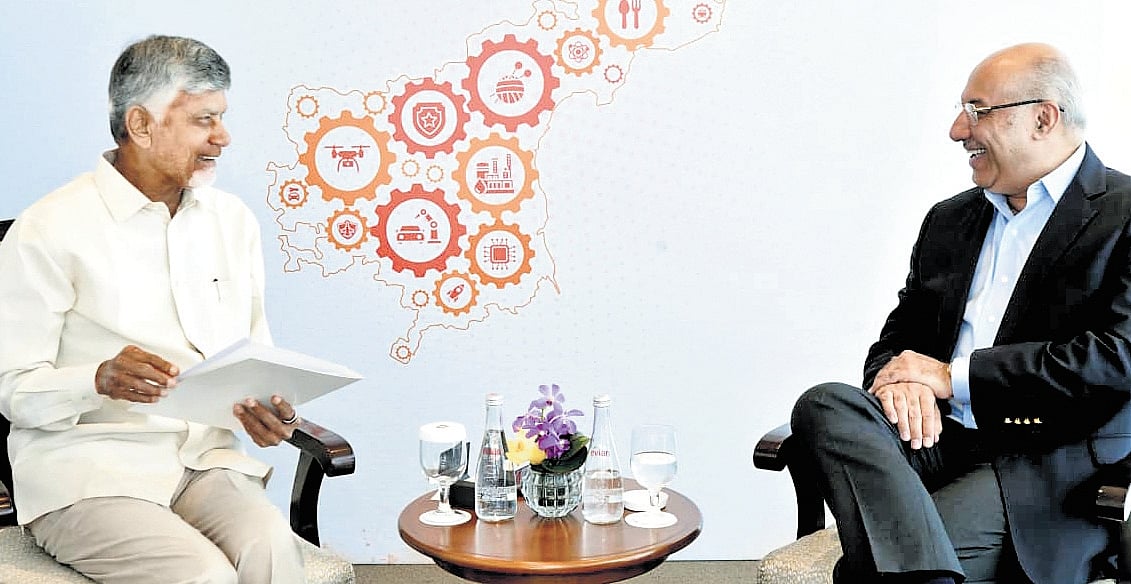
Andhra CM Naidu seeks Google Cloud support for AI-led service delivery

Source: The New Indian Express

Authors: express news service

View Full Article

AP & Google to set up Joint Task Force to explore collaboration on Artificial Intelligence and Cloud Computing

View Full Article

Published On: 2026-06-16

Bitcoin Mining Pivots to AI Compute: AiOnX Acquires 1.3 GW in $500M Deal

Source: Techtimes

Authors: jerry owens

View Full Article

Bitcoin mining to AI data center conversion reached new scale as AiOnX closed a $500 million acquisition of Genesis Digital Assets, gaining 1.3 gigawatts of US and Swedish sites to retool as GPU compute. Converting all 15 facilities requires full ASIC-to-GPU swaps, InfiniBand networking, liquid cooling, and up to $11 million per megawatt in capital costs.

View Full Article

Published On: 2026-06-16

Courts cracking down on AI-assisted legal briefs

Source: Citizen Digital

Authors: afp

View Full Article

AI Artificial Intelligence words are seen in this illustration taken, May 4, 2023. REUTERS/Dado Ruvic/Illustration/File photo When a US judge found fabricated quotes in a lawyer's brief earlier this year, the attorney admitted he had used Claude, an artificial intelligence chatbot, to write the document. That got him a fine and a mandatory course on how to use AI properly. But this case was just one in a rising tide of AI "hallucinations" muddying the legal waters. Now some courts are trying to stem the tide by cracking down on the lawyers concerned. It was judge Jerry Edwards Jr., of Louisiana district court, who sanctioned the lawyer in that recent US case last month. He found the AI-generated hallucinations while reviewing a motion to block evidence from being admitted in a personal injury case. He caught seven quotes attributed to previous court rulings that either did not appear in the original decisions or had been misrepresented. The hapless lawyer said a law clerk had caught other fabricated quotes in a first draft. Instead of learning from his mistake however, the attorney simply asked Claude to correct the errors -- then submitted the brief without reviewing it. The attorney had believed the AI's output was accurate, said the court's May 18 memorandum order announcing the sanctions. "Ignorance of the risks of AI usage is no longer an excuse," the judge wrote, fining the lawyer $1,000 and sending him on a three-hour course on AI-assisted legal practice. But he at least granted part of the motion. - Hundreds of cases - AI-generated blunders do not necessarily destroy a lawyer's case, French lawyer Damien Charlotin told AFP. "The lawyer's credibility is in tatters -- but there are cases where lawyers still win, despite the hallucinations, because they were right on the merits," he explained. But there are other issues. Judge Linda Kevins of New York State's Supreme Court warned in a January ruling that such blunders wasted the time and money of both the opposing party and the court. In addition, she said, they were "potentially harming the reputation of judges and courts whose names are falsely invoked as authors of the bogus opinions". Charlotin has been compiling a database of court documents containing AI hallucinations since April 2023. So far, he has 1,600 examples from 35 countries: from fabricated quotes and cases, to plagiarised arguments or references and out-of-date advice. Since it is a crowd-sourced database it cannot count as the definitive list, but by far the most cases -- 1,116 of them -- come from the United States. Next comes Canada, with 173 cases, Australia with 74, then Britain with 59. - 'Do your job!' - "In the legal field, AI is used for research, finding precedents, and sometimes generating text," said Charlotin. Lawyers and litigants representing themselves who submitted documents containing AI hallucinations were most often using mainstream chatbots, particularly OpenAI's ChatGPT. The data suggests that specialised legal AI tools, used by many law firms, are more reliable -- but they are still not immune from hallucinations. "AI thrives on recognising patterns. And legal citations and arguments are always formatted in the same way, so it's easy for an AI to follow a template and generate fake ones," said Charlotin. "Because no lawyer knows all past cases, when a chatbot outputs something that looks like a law citation, the only way to know it actually exists is to check it," he added. But some lawyers are still not doing that, said judge Scott Schlegel, who serves on the American Bar Association's Task Force on Law and Artificial Intelligence. Too many attorneys still do not understand the technology's limits, he told AFP. Time pressures are compounding the problem, Charlotin's database shows. But that's no excuse, Schlegel told AFP in February. "At this point, I just can't understand how we still have the issue. Just do your job and read the cases. Come on!" - Sanctions - According to Charlotin's data, hallucinations in court filings have increased eightfold in the past year compared with the previous 12 months. He is testing his own AI-powered tool to help lawyers spot hallucinations before they are submitted to courts. But he cannot guarantee it will not itself make mistakes. "It's still up to the lawyers to adapt their verification process to the issues at hand," he said. Databases such as Court Listener have a growing list of rulings on AI-generated calamities in the US courts. And in several such cases, judges are handing out more than just reprimands. Last week, federal judge Sharion Aycock sanctioned lawyers on both sides of a civil case in Mississippi after they submitted AI-assisted legal briefs that cited non-existent cases. Four lawyers were fined $8,000 in total, and two of them were barred from appearing in the Mississippi Northern District Court for two years. "In an era of rampant unverified AI usage within the legal field, this case presents a prime example of the risk associated with serving as a rubberstamp when acting as local counsel", she wrote in the sanctions order. ©Citizen Digital, Kenya

View Full Article

Published On: 2026-06-15

Elon Musk Predicts Money Will Become Irrelevant, Foresees AI and Robotics-Driven Future Leading to Automated Abundance

Source: Latestly

Authors: team latestly

View Full Article

Elon Musk has predicted that AI and robotics will lead to an era of automated abundance, eventually making traditional money irrelevant. As production costs drop and robots handle most labour, Musk envisions a massive economic shift. To mitigate the loss of wages, he continues to advocate for a system of universal high income for citizens.

View Full Article

Published On: 2026-06-15